

It’s the first Saturday of the new year. I should be recovering from multiple days of cake, cinnamon rolls and bagels. Instead, I’m on a livestream demoing a personal management dashboard I built in my boxers.
I’ve been building and talking with Zain Haseeb for six months. Mid-call, we decided to say 'screw it' and just hit record. No more talking about it.
Just show people what we've been making
We started by recapping our “meeting” two weeks ago. Four of us met in Atlanta and sat around my dining table for three days straight. Zain Merchant (or “little Zain” to help keep it straight) brought a desktop computer. Not a laptop. A desktop. With its own power supply.
Four dogs running around licking our feet. A monitor stacked on pretzel boxes. Twelve-hour brainstorming days. I forgot to eat lunch. Twice.
This was not a polished operation. (We’re proud of this.)
The livestream was us showing what came out of that.
Halfway through, Zain says something that I had to write down.
“I just feel like a kid again. Like you’re outside exploring and doing things you never thought you could do.”
What “Kid Again” Actually Looks Like
His wife has a very successful career but, is by no means, a developer and doesn’t know how to code.
They were in the kitchen making dinner, she had an idea for something that would help her colleagues at work, they sketched it out on the counter, and they just... built it.
A working prototype. In about an hour.
I had a similar thing happen.
All of my stuff is in a million different apps. Three different calendars, Claude, Stripe, Substack, Notion, etc.
So on Friday, I started building my own dashboard that connected all of them together in the EXACT way that I wanted it.
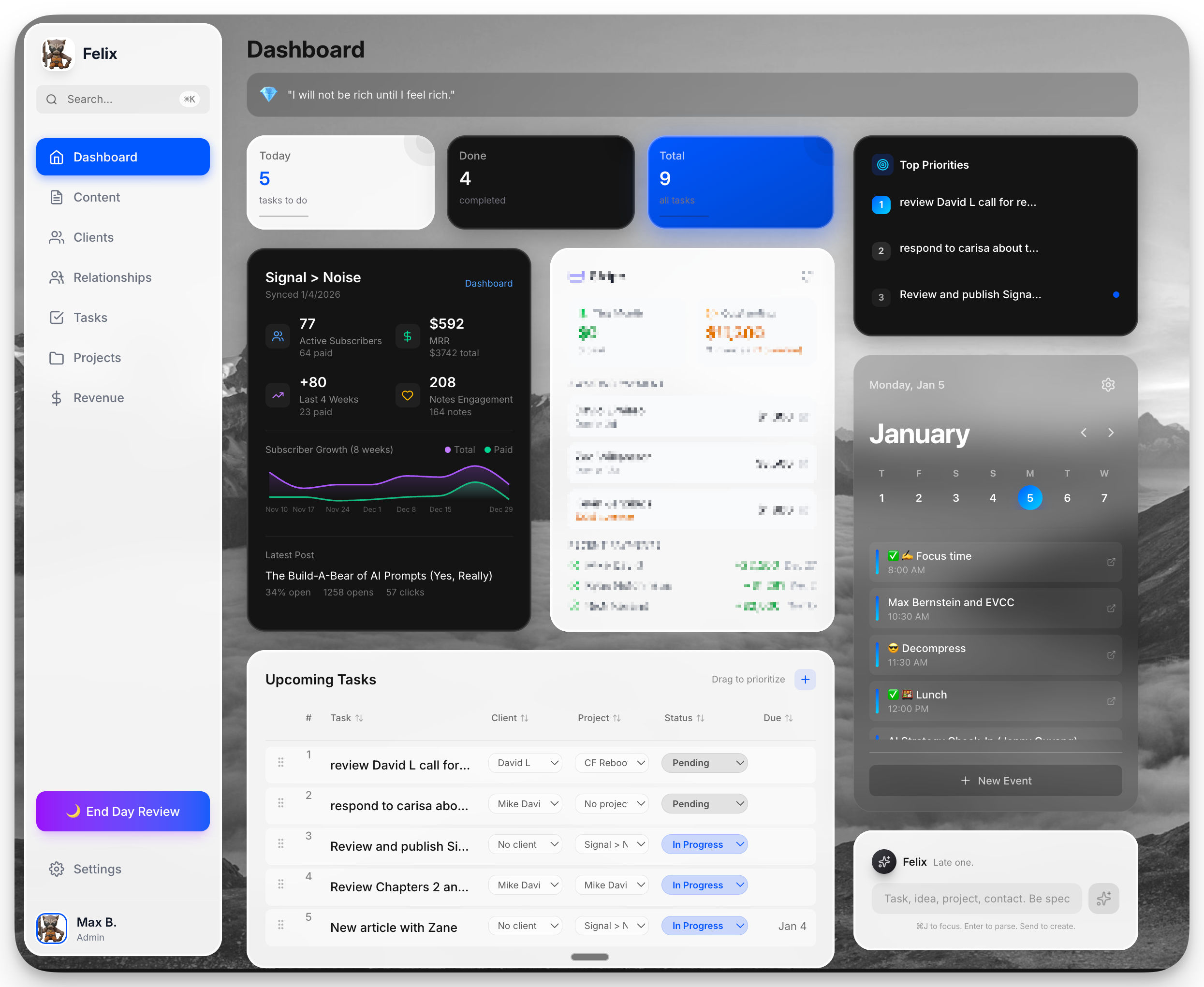
I caught my girlfriend peering over my shoulder (probably…definitely…because I didn’t hear something she said) and her eyes lit up.
We spent the next 2-3 hours building her, her own.
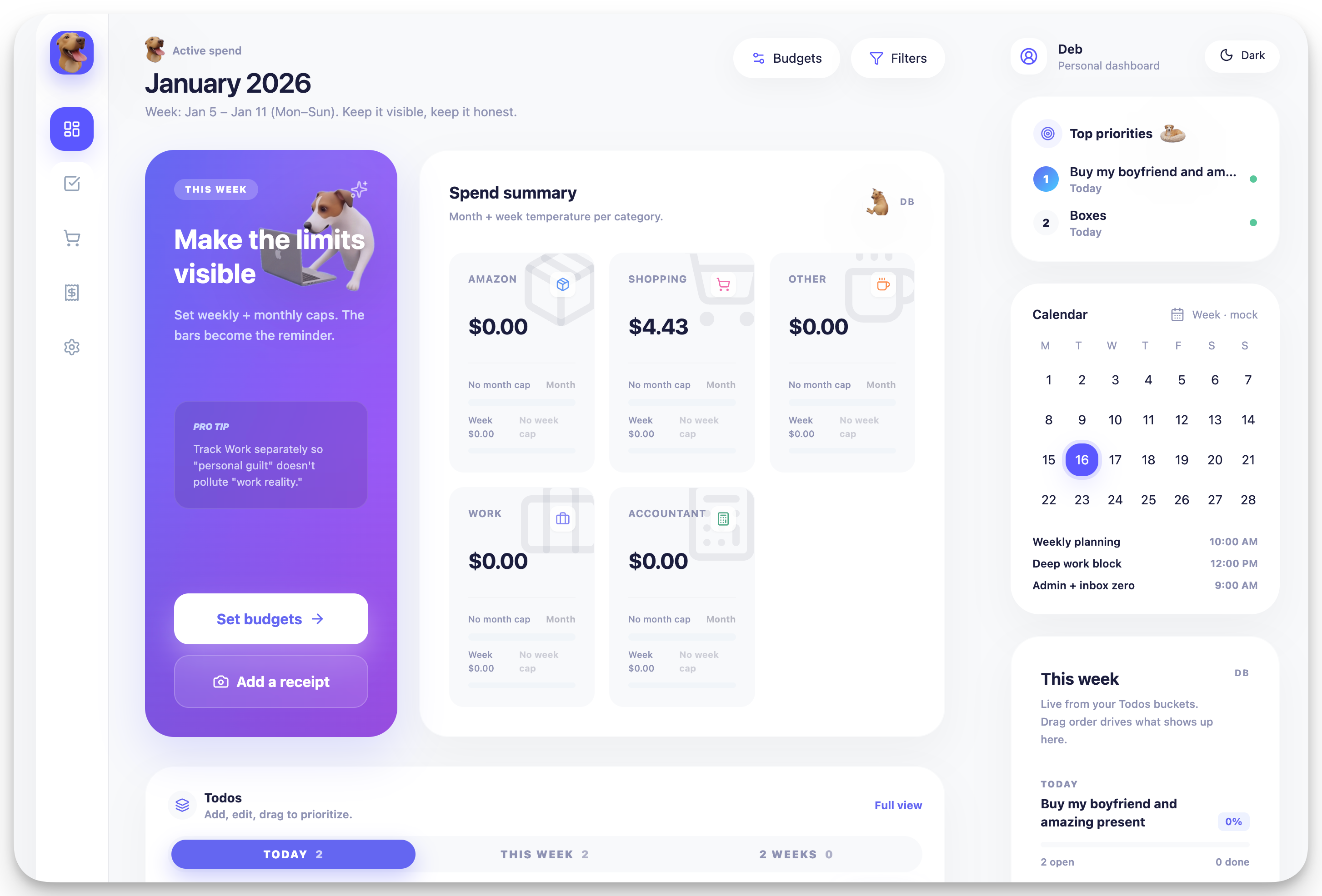
That’s what “feeling like a kid again” actually means. Not productivity. Play.
The Friction Collapse
Here’s what’s actually happening…
The distance between “I have an idea” and “I have a working thing” evaporated.
Building something used to take weeks. Contractors. Slack threads. Approvals. Waiting for someone to email you back about a font choice. Not to mention that whole “coding” thing.
Now it takes an afternoon. Sometimes a lunch break. Sometimes an hour in the kitchen.
Friction is what makes work feel like work.
Strip it out, and you remember why you got into this in the first place.
The Problem Nobody’s Naming
Most people aren’t feeling this…yet.
And it’s not tools. You have access to the same AI we do. Probably paying for the same subscriptions.
It’s not tutorials either. YouTube has forty-seven thousand of them. Every platform has a course now. Your LinkedIn feed is half AI tips from people who discovered ChatGPT eleven months ago and now have “AI Strategist” in their bio.
The limitation is something else entirely.
Imagination.
You can’t use what you can’t picture.
Most AI frustration isn’t about capability. People don’t know what to ask for because they’ve never seen what’s possible. They’re not stuck on the how.
They’re stuck on the what.
I’ve been there. Staring at a blank prompt window. Cursor blinking like it’s waiting for me to be smart. Knowing this thing is supposed to be powerful, feeling like an idiot for not knowing what to type.
You can’t imagine your way out of an imagination gap.
You need to see it.
So We’re Showing, Not Teaching (well, a little bit of teaching)
The community we’re launching isn’t built like a course. No “complete lesson 3 before unlocking lesson 4” gates. No 45-minute videos that could have been a paragraph.
We’ll have workshops. We’ll teach things. But the energy is different.
Here’s something we couldn’t stop using this week.
Here’s an experiment we’re running.
Here’s what just worked for a client.
Here’s a new feature that’s going to be huge.
Here’s why I haven’t slept properly since October.
We’re learning this stuff too. We just want to learn it out loud.
That’s what Beware the Default is.
What That Looks Like in Practice
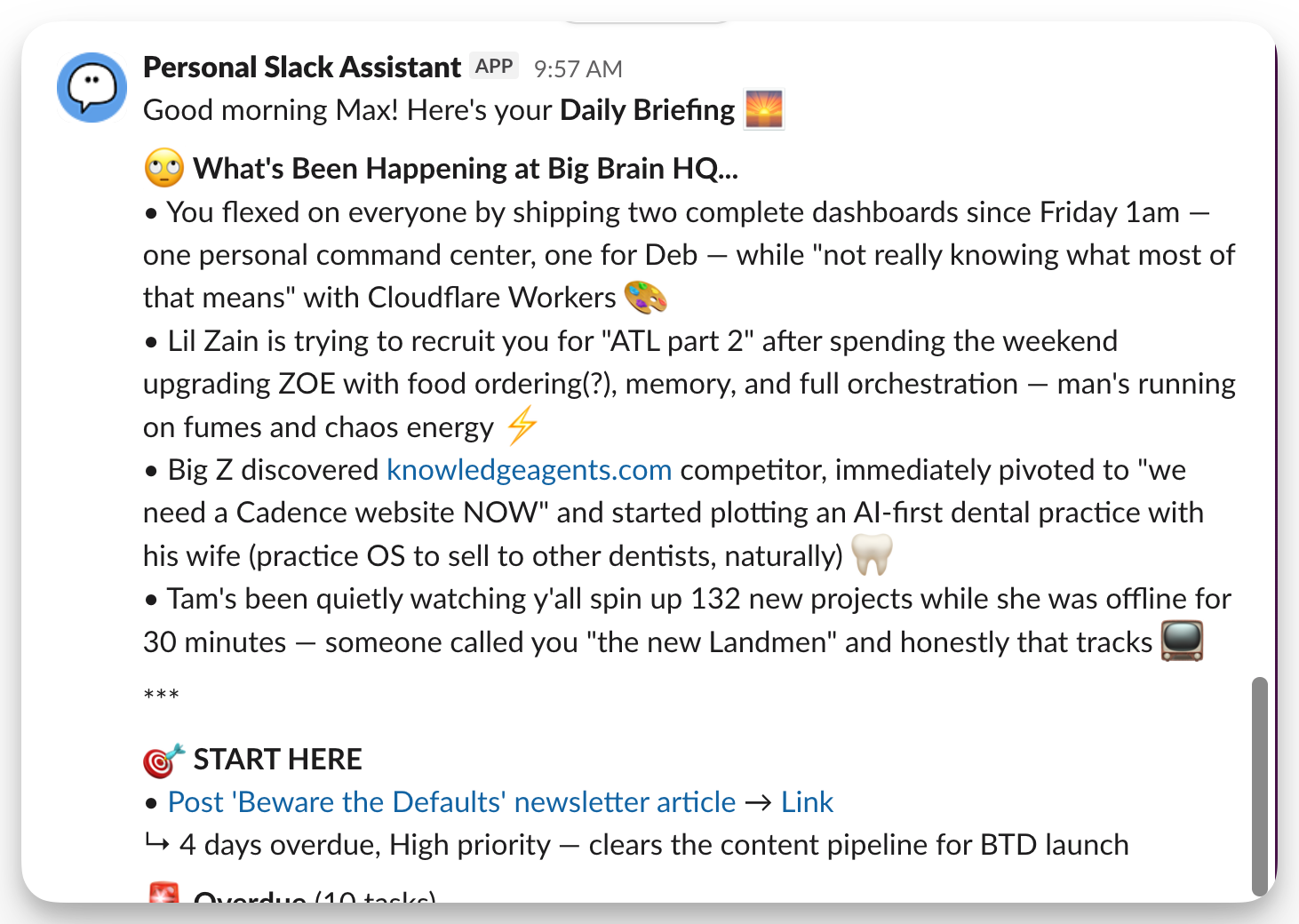
Tam Nguyen , one of our partners, built each of us a personal assistant using Notion’s new AI agents.
You have an idea, message it on Slack, and somehow it just shows up in Notion, packaged and ready to review.
I built a tool called Business Book Prompts.
Blue Ocean Strategy. Jobs To Be Done. StoryBrand.
You’ve read about them. Nodded along. Never applied them.
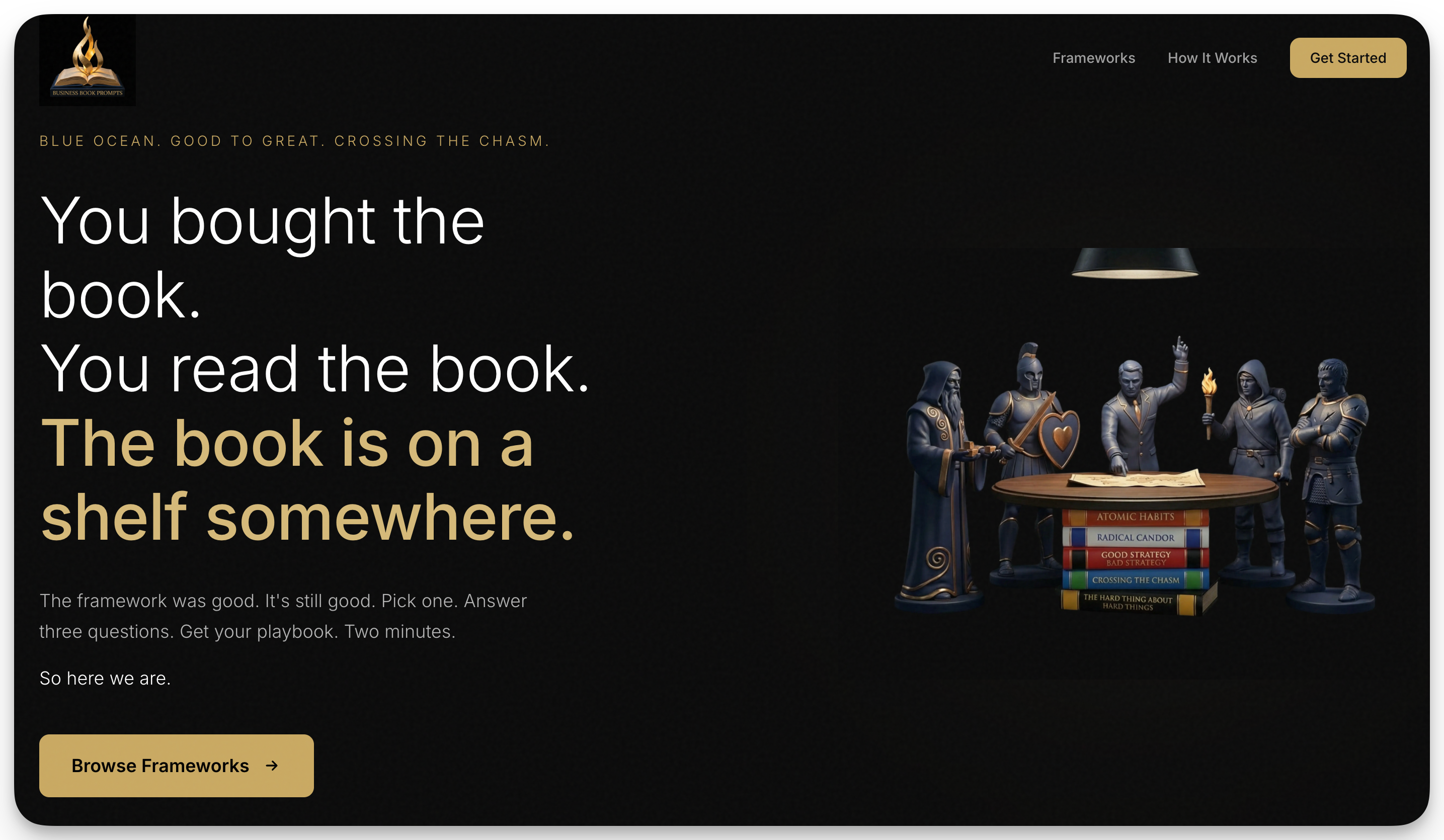
This tool takes those frameworks and makes them about YOU. It interrogates your specific situation, then spits out a personalized playbook. Scripts you can copy and paste. Checklists. Templates. Even a section that tells you why you might be completely wrong. (Most business books skip that part.)

The point is showing what’s possible when you stop accepting generic outputs.
Both of these tools will be in the community.
The Companion Insight
A few weeks ago I wrote about defaults. The presets you accept without questioning.
What Sign Would AI Hold Up at a Football Game?

Saturday night. Ohio State vs. Indiana. Big Ten Championship.
That piece was about awareness. Knowing the systems exist.
This is the companion insight.
Questioning defaults is necessary. But not sufficient.
Even if you reject the preset, you still need to see what else is possible. Awareness without imagination just leaves you frustrated. You know something’s wrong but can’t picture what’s right.
The Community Is Live. It’s Called Beware The Default.
Most communities have one person at the center. Maybe two. This one has four of us.
And honestly?
We didn’t start it with a sudden urge to teach. We started it because we had too much “stuff”.
Workflows we couldn’t stop tinkering with.
Prompts we kept Slacking each other at 1am.
Experiments that worked and experiments that caught fire.
All of it sitting on hard drives, cluttering up Notion databases, living rent-free in our heads with nowhere to go.
We needed an outlet. Somewhere to dump everything we’re building and discovering before we lose it. If other people find it useful, great. But this started selfish. Four people who needed a place to put it all.
But it’s turned into a place for people who push past first answers. Who question the invisible systems running their work and their lives.
Who want to feel like a kid again.
But you know I wasn’t going to let you leave empty-handed.
The Adjacent Possible
There’s a concept from Steven Johnson’s book Where Good Ideas Come From called the Adjacent Possible.

At any moment, only certain innovations are reachable. They depend on what already exists. You can’t invent the microwave before electricity. You can’t build YouTube before broadband.
Johnson uses a metaphor I keep thinking about. Picture a house that expands as you explore it. Each room you enter reveals new doors. But you can only access rooms adjacent to where you already stand.
Your expertise is a house you’ve been building for years.
You’ve developed patterns. Approaches. Ways of seeing problems that other people miss. Rooms you’ve lived in so long you forgot you built them.
Here’s the problem: if you can’t see the rooms you’re already in, you definitely can’t see the doors.
This is why experts plateau. They’ve built something valuable and can’t see what it could become. The same invisibility that hides your methodology hides its potential.
Product ideas sitting right next to your current service. Positioning territories that would take you five minutes to claim if you knew they existed. All of them one room away. Obvious to an outsider. Invisible to you.
I built a prompt that maps these adjacent territories.
Here’s how it works:
You describe one thing you do that you’ve never fully articulated. A pattern in how you work. A question you always ask. A move you make that clients comment on but you’ve never bothered to name.
The prompt surfaces 5-7 adjacent territories that expertise could expand into.
Not boring brainstorming. (”Have you considered starting a podcast?”) It’s anchored to your specific patterns. You’re not inventing from scratch.
You’re discovering what’s already one room away.
THE ADJACENT POSSIBLE PROMPT
# Map Your Adjacent Possible

You have patterns you use every day that you've never named. Things clients notice. Questions you always ask. Moves you make without thinking.

This prompt finds the 7 doors sitting right next to that pattern—products, content, positioning angles you haven't seen yet.

---

## Start here:

**The pattern:**
Describe one thing you do in your work that feels automatic to you but that others have noticed or commented on. Don't overthink it—a sentence or two is enough.

**Your context:**
Who do you work with? What do you help them do? (Again, brief is fine.)

---

## What you'll get:

1. **A name for your pattern** — What you're actually doing (not what you think you're doing)

2. **The principle underneath** — Why it works. The belief that makes it valuable.

3. **7 adjacent territories** — Each one shows:
   - What it is (product, content, framework, service)
   - Why it connects to your pattern
   - What makes it valuable
   - One concrete first step

4. **The hidden doors** — Which 2-3 territories you've probably walked past without noticing, and why

5. **Where to start** — The single door to open first, based on your situation

---

The obvious territories confirm you're in the right place.
The third and fourth suggestions are where it gets interesting.
What to expect:
The first few outputs will feel obvious. That’s the point. The obvious ones confirm you’re in the right territory.
The third and fourth suggestions are usually where it gets interesting. Those are the doors you’ve walked past a hundred times without noticing.
Run it on different patterns. You have more than one room in your house.
Zain said he feels like a kid again.
That’s what happens when you can finally see the doors.
The community is live for everyone.
But this prompt is yours now.
Start with one thing you do. See what’s adjacent.


