
The Invisible Advantage Series
Sheryl Sandberg has no idea she does what you’re about to read. Neither did Sam Altman. Neither did Russell Brunson or Rick Rubin.
Turns out, we all have blindspots. No matter how famous you are.
Previous: [Sam Altman] (#1) | [Russell Brunson] (#2) | [Rick Rubin] (#3)
Editor’s note: I’ve been procrastinating on this article for months. But I’m currently skiing in Telluride (and obviously doing a poor job of staying off the computer), and this book was sitting in my Airbnb…It was the sign I needed.
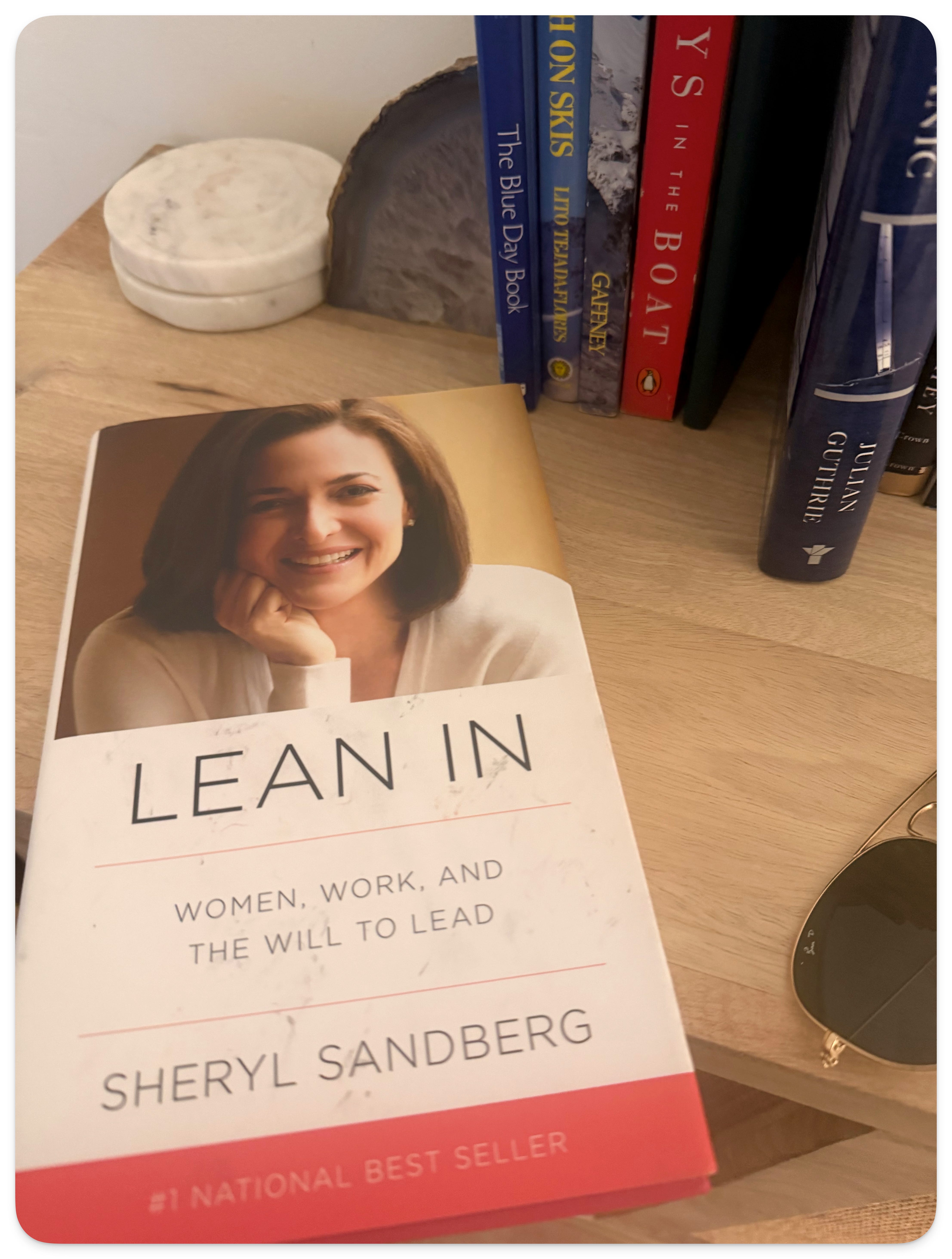
Sheryl Sandberg tells a room full of ambitious, highly accomplished people to stop taking credit for their success.
They furiously take notes.
She tells people going through some of the hardest moments of their lives to “lean into the suck.”
They go out and buy her book.
She tells women to be more aggressive in male-dominated rooms.
Standing ovations.
Sandberg ran Facebook’s business for fourteen years. Before that, Google. Before that, the U.S. Treasury. She wrote Lean In, which sold 4.2 million copies and launched a movement. But credentials alone don’t make advice land. You know people with impressive résumés who get ignored every day. You may have been one of them.
The same advice that triggers eye-rolls from anyone else gets nothing but buy-in from her.
So what in the heck is she doing?
In 1966, psychologist Jack Brehm documented something he called psychological reactance. When people feel their freedom threatened, even by well-meaning advice, they push back. Not stubbornness. A deep human instinct.
You’ve been there. Standing in front of someone, offering wisdom you earned the hard way, going through precisely what they’re describing. And their brain is screaming:
Who are you to tell me what to do?
They don’t say it out loud. They just nod, smile, and ignore everything you said.
I used to think this was a me problem. Maybe I wasn’t explaining it right. Maybe I needed better examples. Maybe they just weren’t ready.
Then I analyzed years of Sandberg’s interviews and transcripts. What I found made me want to delete half of everything I’d ever written about influence.
She has three moves. Once you see them, you can’t unsee them.
The Pattern Hiding in Plain Sight
I was halfway through a Harvard Business School interview when I saw it. She was explaining why she joined Google, and she attributed the entire decision to Eric Schmidt. Not “I realized” or “I figured out.” Eric told her.
So I started counting how many times she credits someone else for an insight.
Watch any of Sandberg’s interviews. The advice doesn’t come from her.
→ A rabbi told her to lean into the suck
→ Eric Schmidt told her not to be dumb about job criteria
→ Her 10-year-old son said “Mom, they all know what happened to us”
→ Bill Campbell asked if she was done talking about what she used to do
In every one, she’s the channel, not the source.
That’s why it lands. You’re not the student. You’re watching her be the student.
She does it the same way every time.
After compiling my notes I realized Sandberg has three moves. Once you see them, you can’t unsee them. And once you understand why they work, you’ll realize you’ve been triggering resistance your entire career.
Move 1: Disappear
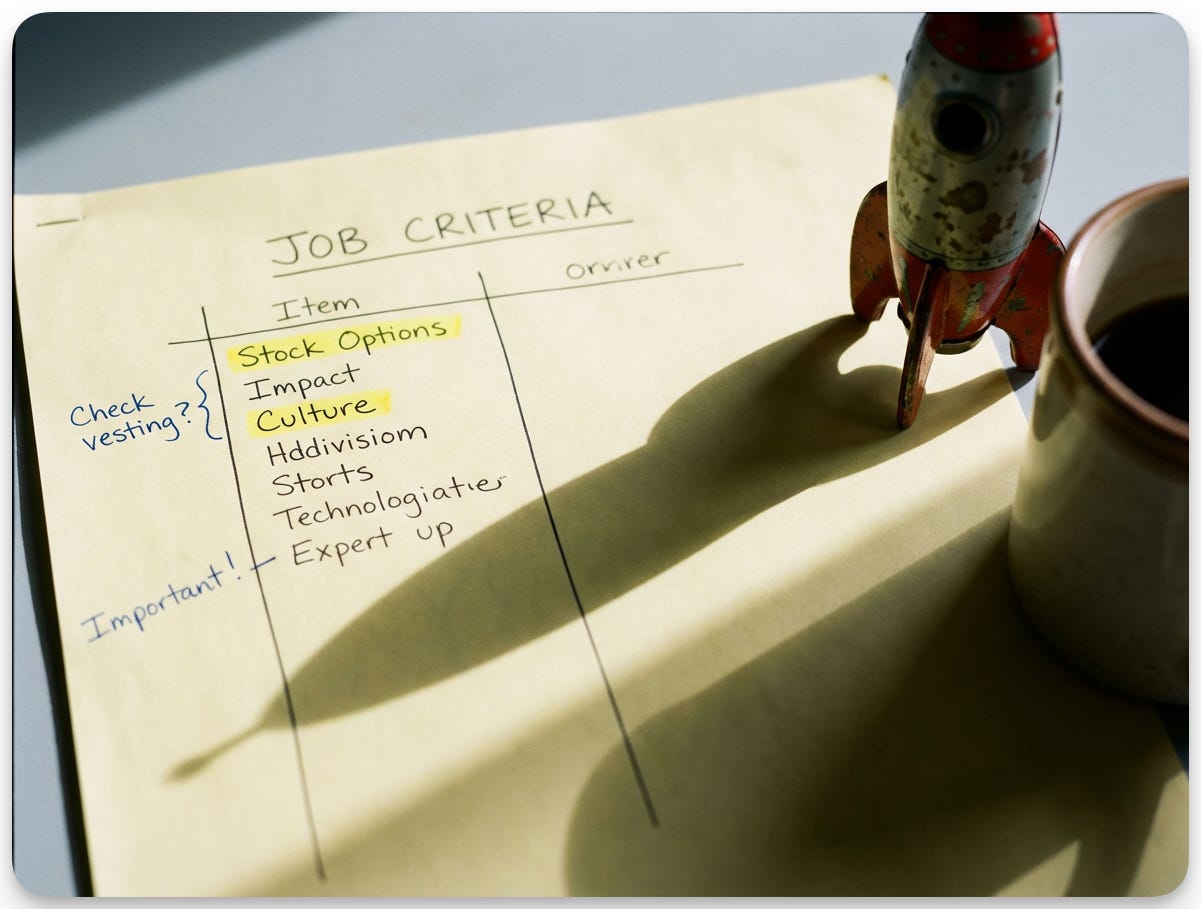
When Sandberg was looking for a job after business school, she had a chart of criteria. Google met none of them. She showed Eric Schmidt the chart and explained the problem.
“He put his hand on my paper and said, ‘Don’t be dumb. If you’re offered a seat on a rocket ship, don’t ask what seat. Just get on.’”
That story has been told thousands of times. It launched a phrase that every recruiter in Silicon Valley now uses. And Sandberg never once claims it as her insight. She attributes it to Eric Schmidt. A specific moment with a specific gesture:
Hand on paper.
She could say “I learned to prioritize growth over job criteria.” It’s the same lesson but you’d forget it by tomorrow. The Eric Schmidt version sticks because you’re not receiving instruction. You’re witnessing a transformation.
When her husband Dave died, she didn’t know how to move forward. Phil Deutch put his arm around her and said:
“Option A is not available. So let’s just kick the shit out of option B.”
That became the title of her book.
She positions herself as a student who got lucky with teachers.
Donald Miller built a $100 million business around this same insight. His StoryBrand framework has one rule:
Your customer is the hero, not your brand. You are the guide. The guide has wisdom and empathy, but the guide is never the main character.
Luke Skywalker is the hero. Yoda is the guide. Yoda doesn’t say “I defeated the Empire.” He says “Do or do not.”
The best documentary filmmakers discovered this decades ago. The observational style, what critics call “fly on the wall,” works because the filmmaker disappears. You forget someone is holding the camera. The subject becomes the story.
Great mentors do it instinctively. Research on effective mentoring found that the best ones “pass on their knowledge through informal conversation and everyday modeling.” They’re listeners who develop your unique voice, not lecturers who impose their own.
They all landed on the same move. The person with authority steps back. The person receiving wisdom becomes the protagonist.
Here’s why your advice doesn’t land.
You’re the hero of your own wisdom. “I developed this framework.” “I figured out the pattern.”
→ You’re asking people to accept that you’re smarter than them
↳ Their brain won’t let them
↳ Reactance kicks in
↳ Arms cross. Eyes glaze
Sandberg asks them to receive what she received. No hierarchy. No threat to autonomy. Just one student passing notes to another.
Move 2: Confess First

Most leaders establish credibility first, then share a failure. Sandberg inverts this.
When discussing her career on Oprah’s Super Soul Sunday, she didn’t open with Google or Facebook. She opened with the void.
“For me, it was a void. It was closing in on me so I couldn’t breathe.”
When talking about joining the tech industry, she starts with not belonging.
“I never wanted to work in business. My dad’s a doctor. My mother was a community organizer. Business was kind of bad in my family.”
When returning to work after Dave’s death, she starts with disaster.
“I came to work the first day. I was there for 4 hours. As far as I could tell, it was total disaster. I fell asleep in a meeting.”
By the time the authority arrives, your guard is down. You’re not being lectured by someone who has it figured out. You’re hearing from someone who struggled with the same things you struggle with.
Therapists figured this out decades ago. Push someone and they push back. Give them room to decide for themselves and they stop fighting you.
Sandberg’s vulnerability looks and feels like weakness. It’s actually strategy. She earns the right to teach you by admitting she needed to be taught.
Here’s why your advice doesn’t land.
You lead with credentials. You establish authority before showing humanity. By the time you share a failure, people have already decided whether to trust you. And guess what that answer usually is?
Move 3: Hand Over the Script
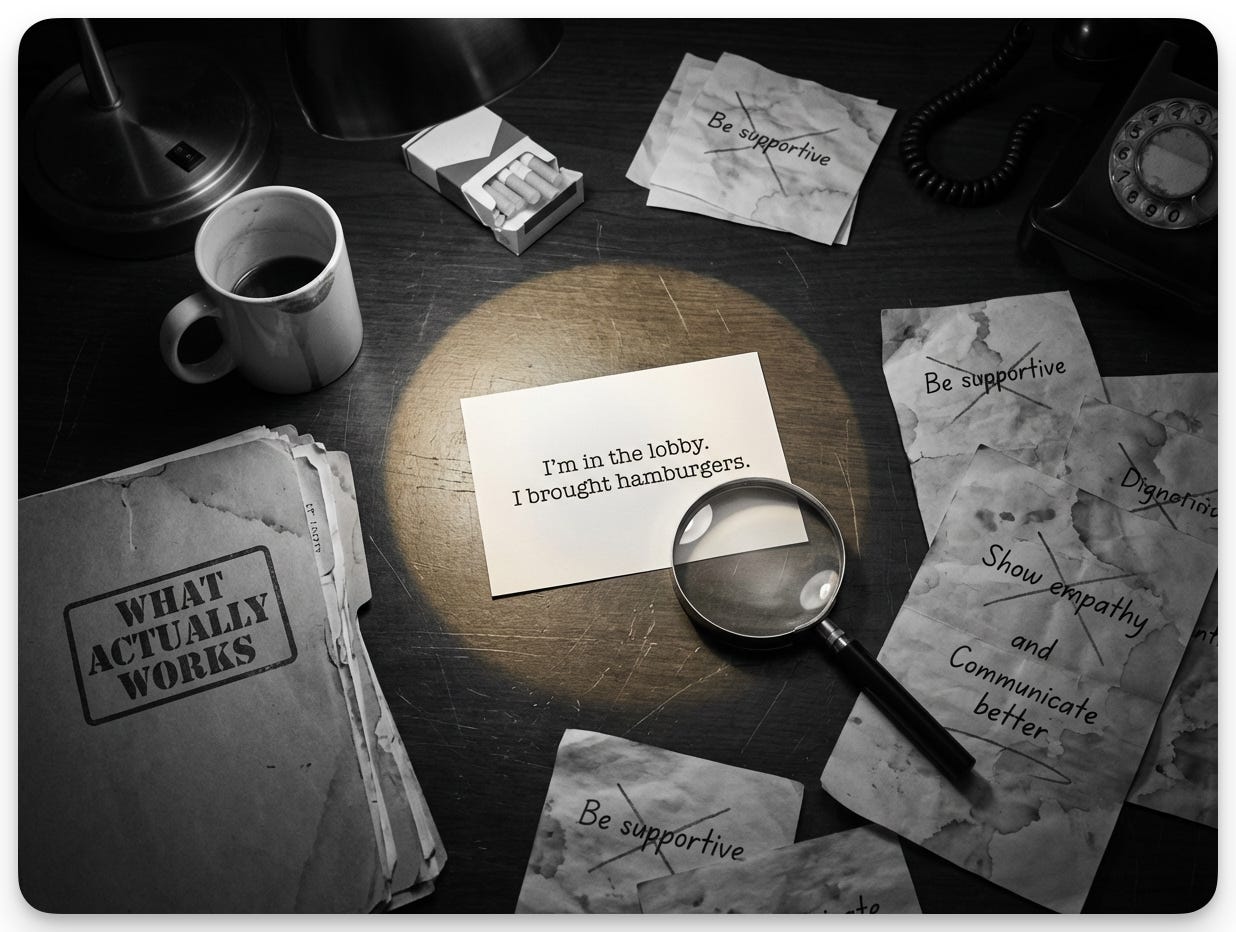
Most advice is abstract. “Be supportive.” “Show empathy.” “Communicate better.”
Words that mean nothing until you’re standing in front of someone who’s crying and you have no idea what to say.
Sandberg gives you the actual sentence. She learned what to say by experiencing what not to say. Every bad platitude she received in grief became a lesson in what actually helps.
Don’t say “How are you?” Say “How are you today?” The word “today” acknowledges that grief exists on a spectrum. Yesterday was different. Tomorrow might be worse.
Don’t say “Is there anything I can do?” That question is a burden disguised as an offer. The person in grief can barely remember their own name. They cannot also manage your helpfulness. Just do something. “I’m in the lobby. I brought hamburgers.”
Don’t say “I.” Say “We.” When Phil had his arm around her and said “let’s kick the shit out of option B,” the “we” mattered as much as the advice. He wasn’t telling her what to do. He was joining her.
I’ve watched that interview three times. The arm around her. The “we.” Every time, I lean forward in my chair. Something about it lands before I can analyze why.
But notice what she did. She gave you the sentence, not the concept.
Scripts remove the last obstacle between knowing and doing. You don’t have to translate the principle into action. The action is right there.
This is uncomfortably practical. Most advice stays safely abstract so you can nod along without changing anything. Sandberg hands you the exact sentence. Now you have no excuse.
There’s research behind this. Psychologists call it Implementation Intentions. People who know exactly what they’ll say are 2-3x more likely to actually do it. Doctors learn exact phrases for delivering bad news. FBI negotiators memorize scripts for de-escalation. Abstract advice requires translation. Scripts are ready to use.
Here’s why your advice doesn’t land.
You tell people what to think. She tells them what to say. You give principles. She gives scripts. Principles require translation. Scripts are ready to use.
What Makes It Stick
There’s one more thing Sandberg does, and it’s the piece that makes everything else stick.
She doesn’t just tell you what to do. She dissolves the guilt you’d feel about doing it.
When she was struggling to feel joy after Dave’s death, she felt guilty dancing at a friend’s bar mitzvah. Her brother-in-law Rob called her. He was crying.
“All Dave ever wanted was for you and your children to be happy. Don’t take that away from him in death.”
Read that again.
Permission to want what she already wanted but couldn’t admit.
Her son did the same thing. “Be yourself.” Three words. Permission to stop performing. He was ten. It took a child to say what the adults had been circling around for months.
Powerful.
“Lean In” itself is permission. Permission to want power. Permission to want success. Permission to stop apologizing for ambition.
Research on psychological reactance backs this up. Adding phrases like “but of course, it’s up to you” dramatically reduces resistance. When you acknowledge someone’s autonomy, their defenses drop.
Most persuasion tries to make you want something new. Sandberg’s persuasion makes you stop apologizing for wanting what you already want. You walk away thinking you made the decision yourself.
That’s why it doesn’t feel like influence. Which is exactly when influence is most powerful.
Now Look in the Mirror
Here’s what connects all of this.
Psychological Reactance is triggered when someone threatens your sense of freedom. The moment you position yourself as the expert with answers, you become a threat. The brain’s response is automatic: resist, dismiss, ignore.
Sandberg never triggers that response because she never positions herself as above you. She’s a fellow student. She struggled. She received wisdom from others. She’s just passing it on.
The channel, not the source.
I had AI analyze those years of interviews looking for a technique. What I found was simpler. She’s just honest about where her wisdom comes from. The rest of us hoard credit like it’s the last croissant.
The patterns aren’t complicated:
Be the channel, not the source.
Open with failure, not credentials.
Give scripts, not principles.
Grant permission, not instruction.
Here’s what I noticed while writing this: I kept typing “I discovered these patterns.” Then deleting it. Then typing it again.
I didn’t discover anything. Sandberg showed me, the same way she shows everyone. She left it in plain sight for years. I just finally paid attention.
Someone taught you what you know. Probably several someones.
Make sure you remember to mention them.
-Max
Now What?
You just read 2,000 words about influence patterns you’ve been violating your entire career.
You nodded along. You thought “I do that.” Maybe you winced at a few parts.
Here’s what happens next for most people: Nothing.
You’ll send the same pitch tomorrow. You’ll open with credentials. You’ll say “I developed” and “my framework” and “let me explain why.” You’ll watch the prospect’s arms cross. You’ll wonder why Thompson went with someone else.
The 28-year-old with the ChatGPT website will close another deal you should’ve won. Not because he’s better. Because his pitch doesn’t contain the seven words that make people stop listening.
You won’t even know which seven words.
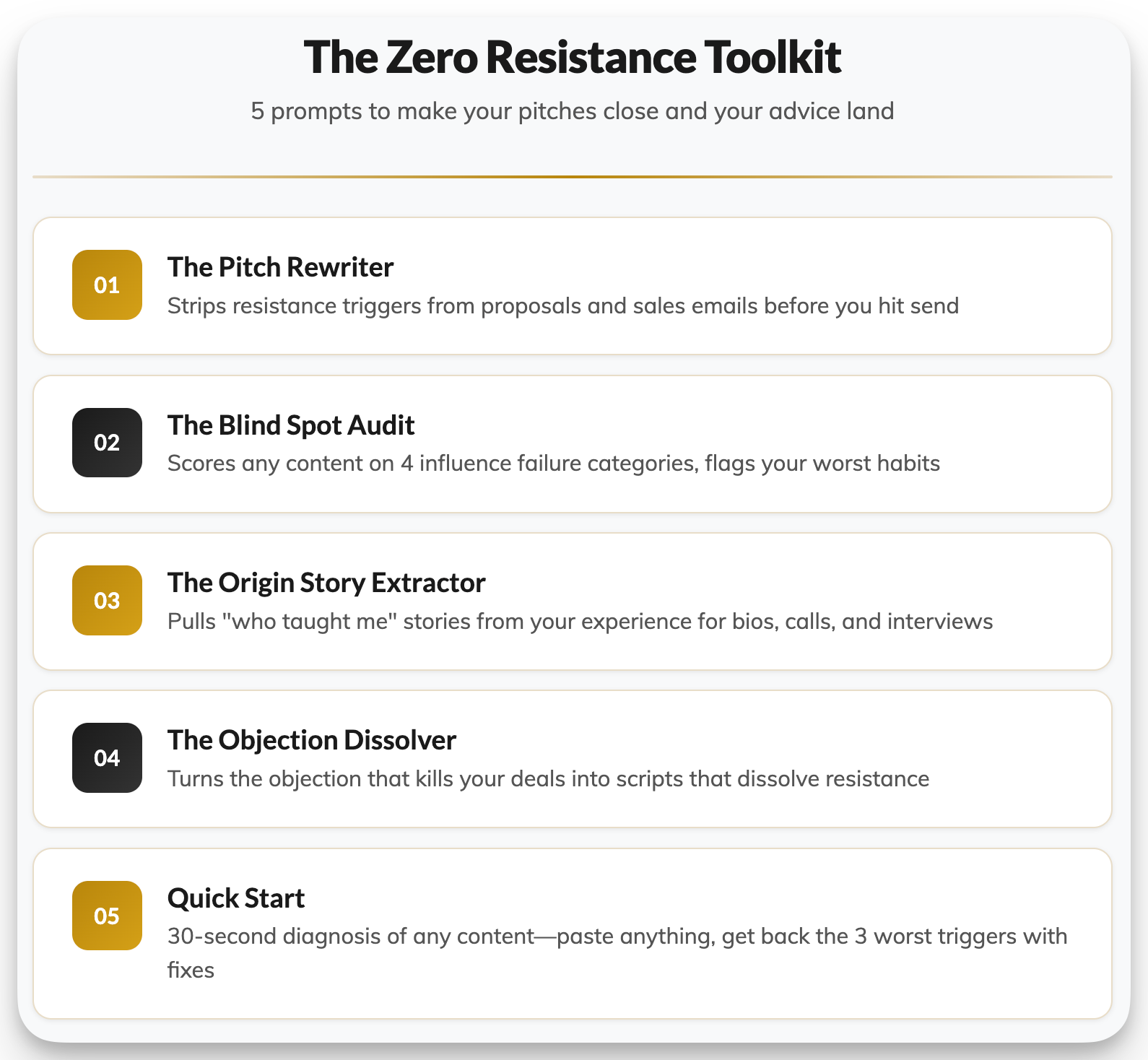
The Zero Resistance Toolkit
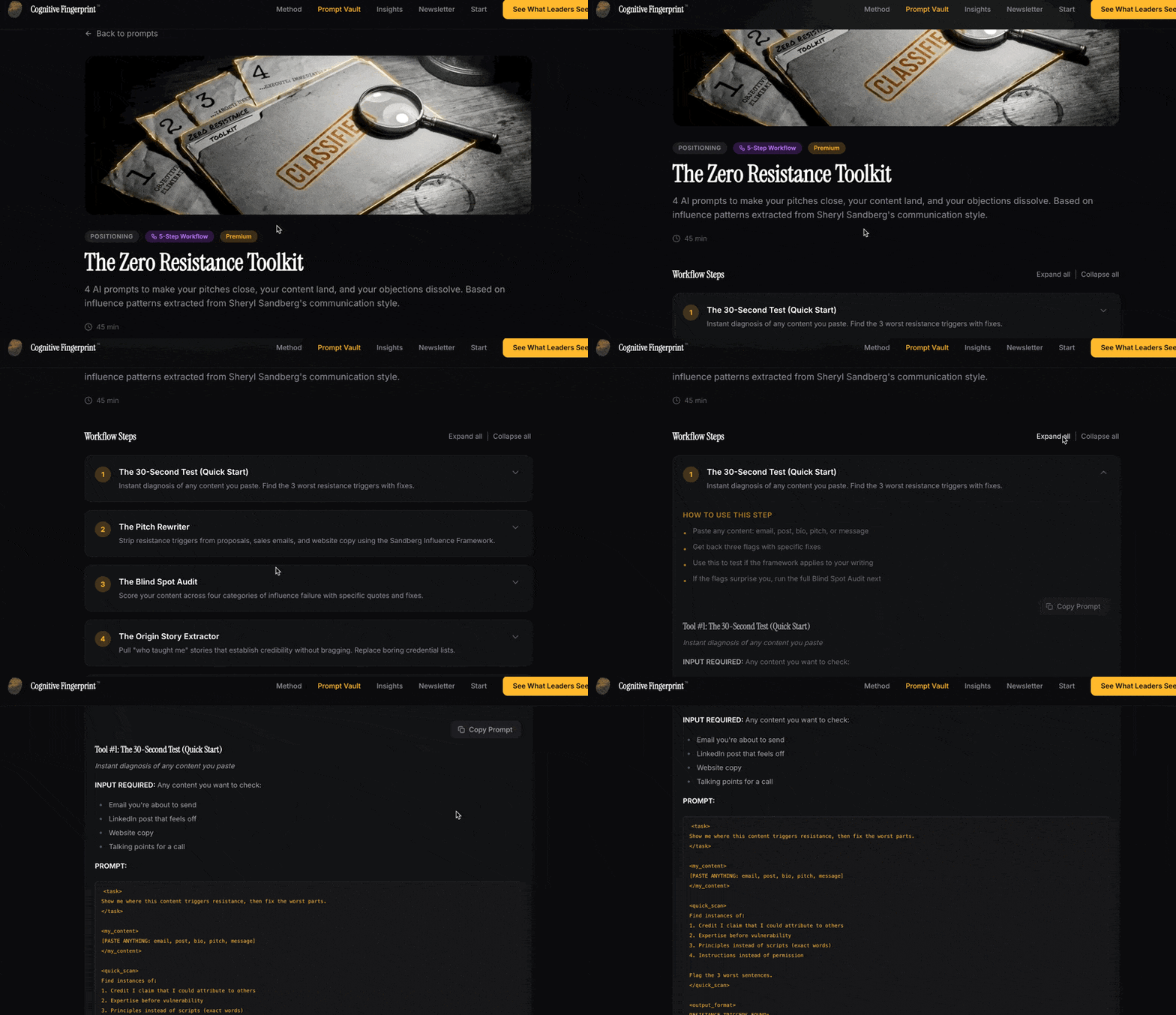
That’s the problem with patterns you can’t see. Knowing they exist doesn’t mean you can find them in your own writing.
You can diagnose a client’s business in 30 minutes flat. You can spot their positioning problems, their pricing mistakes, their buried value. You’ve done it a hundred times.
Your own pitch? Blind spot.
Your own bio? Blind spot.
The email you sent yesterday that’s sitting in their inbox, day 4, no response? You have no idea which sentence killed it.
I turned Sandberg’s four moves into prompts that find your blind spots for you.
Paste in a pitch. The prompt shows you exactly which phrases trigger resistance, and rewrites them.
Paste in an email that got no response. The prompt scores it across four categories of influence failure and flags the three worst sentences.
Paste in your bio. The prompt extracts “who taught me” stories you can use instead of listing credentials nobody reads.
Paste in the objection you keep hearing. The prompt shows you why your current response makes it worse, and gives you three scripts that dissolve it.