

I started noticing something in positioning calls with consultants.
They’d list their credentials like ingredients on a cereal box: “I help with strategy.” “I do transformation.” “15 years of experience.” Prospects would nod politely, check their watch, then ask about pricing.
But when I’d ask “What do you SEE that others miss?” their posture changed. They’d stop performing and start teaching. The conversation shifted from interview to revelation.
Turns out, there’s neuroscience behind this.
Your brain lights up when it sees something new.
Not “interesting” or “improved.”
New.
Cognitive neuroscientists Nico Bunzeck and Emrah Düzel proved this with MRI imaging. They found a region called the substantia nigra, your brain’s novelty center, that only activates for completely new stimuli. Once something becomes familiar, it goes dark.
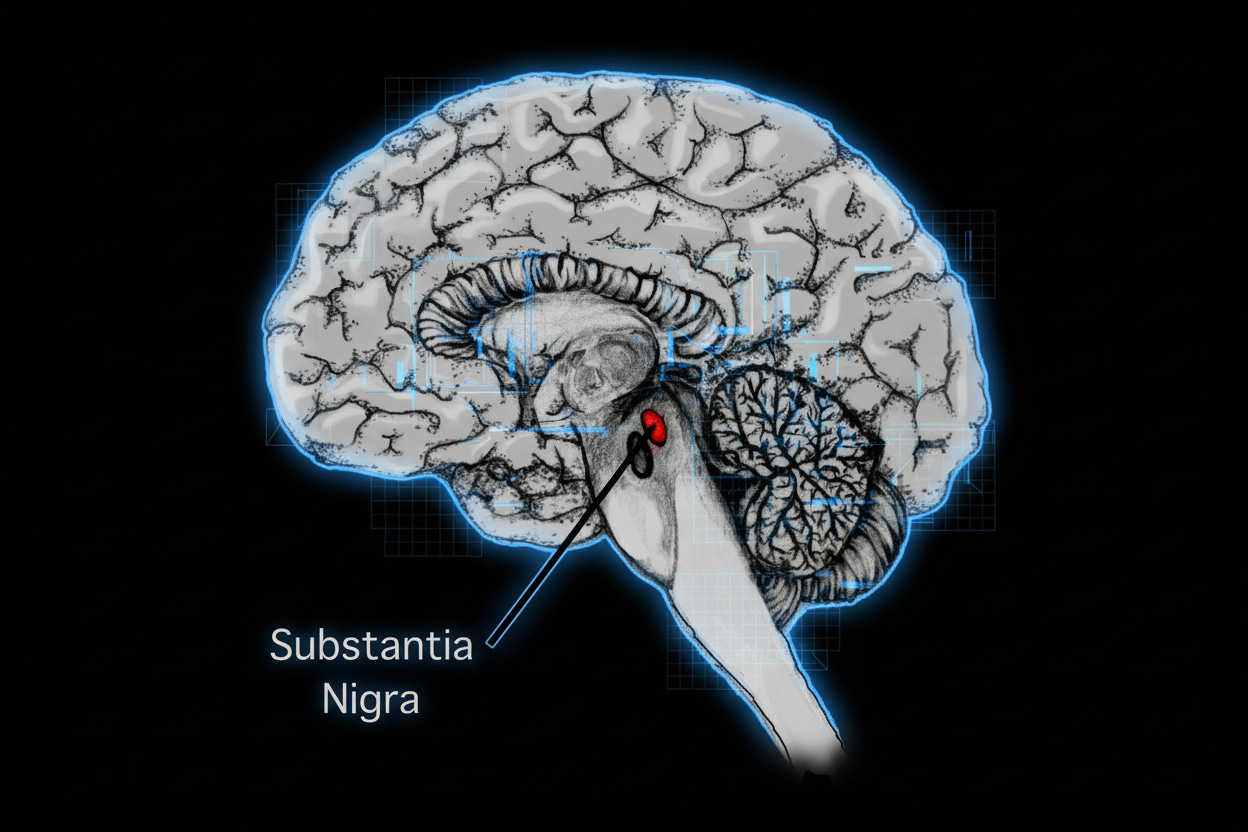
The researchers explained it this way:
“When we see something new, we see it has a potential for rewarding us in some way. This potential that lies in new things motivates us to explore our environment for rewards.”
Which reveals a paradox for consultants:
Your differentiation isn’t what you DO. It’s what you SEE.
But what you see is invisible to you.
(And I’ll show you why in a minute.)
The Two-Room Trap
Consultant positioning expert David C. Baker uses a simple framework to explain where most consultants go wrong.
Picture two rooms. One is your Execution Room, what you do with your hands. The deliverables. The Adobe work. The reports. The workshops.
The other is your Strategy Room, what you see with your mind. The thinking. The patterns you recognize. What you could present in a five-page Word document, no color, no drawings, just insight.
Most consultants leave both doors open. Clients can walk through either one first. They can buy your thinking OR your execution.
That’s the trap.
When both doors are open, you’re describing what you do:
“I help leaders with strategy.”
“I’m a marketing consultant.”
“I do organizational transformation.”
That’s activity-based positioning. You’re in the execution room, competing with everyone else who claims the same activities. You’re asking prospects to compare you, to judge who’s “better” at strategy, at transformation, at marketing.
And as Baker points out:
“Many firms are getting paid for their execution, but they’re giving away their thinking, often in the proposals.”
You can’t charge premium for execution. It’s becoming more and more commoditized every day (in a large part because of AI.)
That’s the thing about activity-based positioning: It forces you into the commodity trap no matter how good you are.
The premium is in the strategy room, in what you see that others don’t.
The Brain Science Behind “New vs. Better”
Here’s where the neuroscience meets the positioning problem.
Describing what you DO triggers comparison.
Describing what you SEE triggers curiosity.
When you position yourself as “better,” you’re asking people to:
Compare you to alternatives
Validate your superiority claims
Overcome their existing solution inertia
Trust that you’re not exaggerating
That’s cognitive work. And it doesn’t trigger your brain’s novelty response.
Marketing strategist Shawn Twing (20+ years in direct response) recently shared an insight from Rich Schefren that captures this:
“New is better than better.”
He’s right. And there’s evolutionary science behind it.
Our brains evolved to detect change because trees weren’t threatening, grass wasn’t threatening, clouds weren’t threatening... unless they moved. Motion signaled threat or reward.

Oren Klaff, author of Pitch Anything, summarizes the attention economy this way:
“Attention will be given when information novelty is high and will drift away when information novelty is low.”
What You See Is Novel (But Invisible to You)
Here’s the paradox: Your perceptual advantage, what you see in the strategy room, is genuinely novel. No one else has your exact combination of mental models, pattern recognition, and decision frameworks.
But you can’t see it.
The better you get at something, the more automatic it becomes. Think about riding a bike. Once you learn, you stop thinking about balance, momentum, steering. You just ride. Your expertise becomes invisible to you.
The same thing happens with professional expertise. You develop sophisticated pattern recognition systems that operate automatically. You can’t explain them because you’re not conscious of using them.
Which means you can’t position what you can’t see.
You default back to activity descriptions. Back to the execution room. Back to competing on “better.”
That’s the paradox of mastery: The better you get, the worse you become at selling what you do.
Your Patterns Exist. They’re Just Invisible to You
Your patterns are operating below consciousness. But they can be extracted—pulled out and given names that make them visible to prospects.
Let me show you what I mean.
Before extraction:
“I help sales teams close more deals. I’ve been in sales for 15 years and I know how to handle objections and build rapport.”
That’s what every sales trainer says. You’re asking prospects to compare credentials.
After extraction, the same person says:
“I track what I call the Silent Objection Map, the concerns prospects don’t voice in discovery calls but use to kill deals 3 weeks later. There are six predictable silent objections. I can tell you which one your prospect has in the first 12 minutes, before they even know they have it.”
That’s perceptual advantage with a mechanism. It triggers curiosity:
“Wait, how do you see that?”
That shift, from skepticism to curiosity, happens because the mechanism has a name.
The name creates three things:
Authority (you studied this enough to name it)
Memorability (people can reference it)
Category ownership (”the Silent Objection person”)
It’s the difference between “I help close more deals” and “I’m the person who maps silent objections.”
Or take marketing:
Without extraction:
“I help companies improve conversion rates through better messaging.”
After extraction:
“I use the Mental Opt-Out Threshold to find the exact moment your prospect’s brain checks out. It happens at 47 seconds on average. I map which phrase triggers it, and it’s almost never what you think.”
The pattern works across every domain.
Every Expert Has Hidden Mechanisms
Consider these transformations from David Baker’s framework:
Activity: “I help leaders with strategy and execution”
Perception: “I monitor the Commitment Fade Curve, how conviction dies in organizations”
Activity: “I do organizational transformation”
Perception: “I identify Reversion Triggers, what makes organizations snap back to old patterns”
Activity: “I help people overcome limiting beliefs”
Perception: “I track the Permission Gap,what you’re waiting to allow yourself to do”
Or consider a learning designer who described himself as someone who “helps with training and development.”
(From Invisible Expertise Class 4)
After one extraction session analyzing his resume and work history, his positioning shifted to:
“I design learning experiences that survive change, using frameworks that ensure training doesn’t become obsolete in 3 months.”
The frameworks were already there.
The Change-Resistant Training Framework
The “Why Would They Care?” Diagnostic
He’d been using them for 15 years.
He just didn’t know they had names.
Same expertise. Different positioning.
One makes you interchangeable. The other makes you irreplaceable.
Four Questions That Reveal Your Strategy Room
Look at how you currently describe your work. Then ask:
What do I see that others miss?
Not what you do. What variable do you track that standard approaches ignore?What connection do I make that reframes the problem?
What pattern do you recognize that changes how clients think about their situation?What question do I ask that shifts everything?
What inquiry reveals the real issue beneath the surface problem?When do I know to use which approach?
What signals tell you to go left instead of right?
These answers reveal your novelty. And novelty doesn’t require proof the way “better” does. Novelty just requires demonstration. You show people what you see. Their brain’s novelty center lights up. They get curious.
What Cuts Through After the AI Hype Dies
Shawn Twing observed something about the current moment. We’ve just spent years hearing that AI will transform everything. The novelty around AI is wearing off.
People are starting to feel the “AI disenchantment effect,” where the promise doesn’t match the reality.
What’s going to cut through in the next few years isn’t “I’m better because I use AI.”
It’s: “I see something you don’t. Let me show you.”
Not better. New.
And new activates the brain pathways that make people actually pay attention.
Remember that substantia nigra, your brain’s novelty center? It doesn’t light up for “better credentials” or “more experience.”
It lights up for what it’s never seen before.
That’s what extraction gives you: The ability to show people what they’ve never seen.
Your Invisible Expertise Isn’t Going to Extract Itself
On December 18th, I’m running a live extraction workshop inside Cozora, a community where experts share their actual AI systems and frameworks every Thursday, not pre-recorded theory.
This session is hands-on: You’ll analyze your real work and identify 3-5 frameworks you execute unconsciously but never named.
What you’ll leave with:
Your “automatic excellence inventory” documented
Working titles for frameworks you didn’t know existed
The mechanisms that make you different (finally visible)
Join Cozora and attend the December 18th workshop
Live expert sessions every Thursday. The extraction workshop is December 18th.
P.S. If you are a paid member of this newsletter, shoot me a DM before signing up. I will send you a special code for a nice little discount.
Sources:
Shawn Twing’s marketing insights (20+ years in direct response and digital marketing)
Rich Schefren (marketing strategist and advisor to 8-figure+ businesses)
David C. Baker, consultant positioning expert (ReCourses, Inc.)
Research by cognitive neuroscientists Nico Bunzeck and Emrah Düzel on novelty and brain function
Oren Klaff, “Pitch Anything”
Awesome article!
Thanks Max!