

The Case Study That Made Me Question Everything
I once published a case study exactly the way we’re taught.
Lead with the eye-catching client name. Hook them with the burning problem. Present your innovative solution. Close with impressive metrics—conversion rates up 312%, engagement skyrocketing, and an enviable ROI.
I followed every rule in the content marketing playbook. Crisp subheadings. Punchy bullet points. Scrollable data visualizations. A clear call-to-action. It was the kind of case study that should have prospects hammering the contact button.
But instead of a flood of leads, I got something unexpected. One message on LinkedIn that made me pause. It wasn’t about my metrics or my solutions. It was something deeper:
"Your results are solid, but what I really want to know is—what did you discover along the way? What patterns emerged that nobody's talking about? What surprised even you?"
This question opened my eyes. My case study hadn’t missed the mark because of a lack of polish or data. It missed because it was answering the wrong questions. What this person—and, as I realized later, my ideal clients—wanted wasn’t just results. They wanted the wisdom only deep experience could produce.
Where Traditional Case Studies Fall Short
Most case studies are built to impress. The formula is simple: showcase the problem, present the solution, and celebrate the results. But in a world where everyone follows the same formula, even the most impressive metrics start to blend together.
When your case studies look like everyone else’s, no matter how great the results, you risk fading into the background. More data and more testimonials won’t fix this. What will? Insights that prove your expertise is irreplaceable.
The Framework Evolution: From Documentation to Discovery
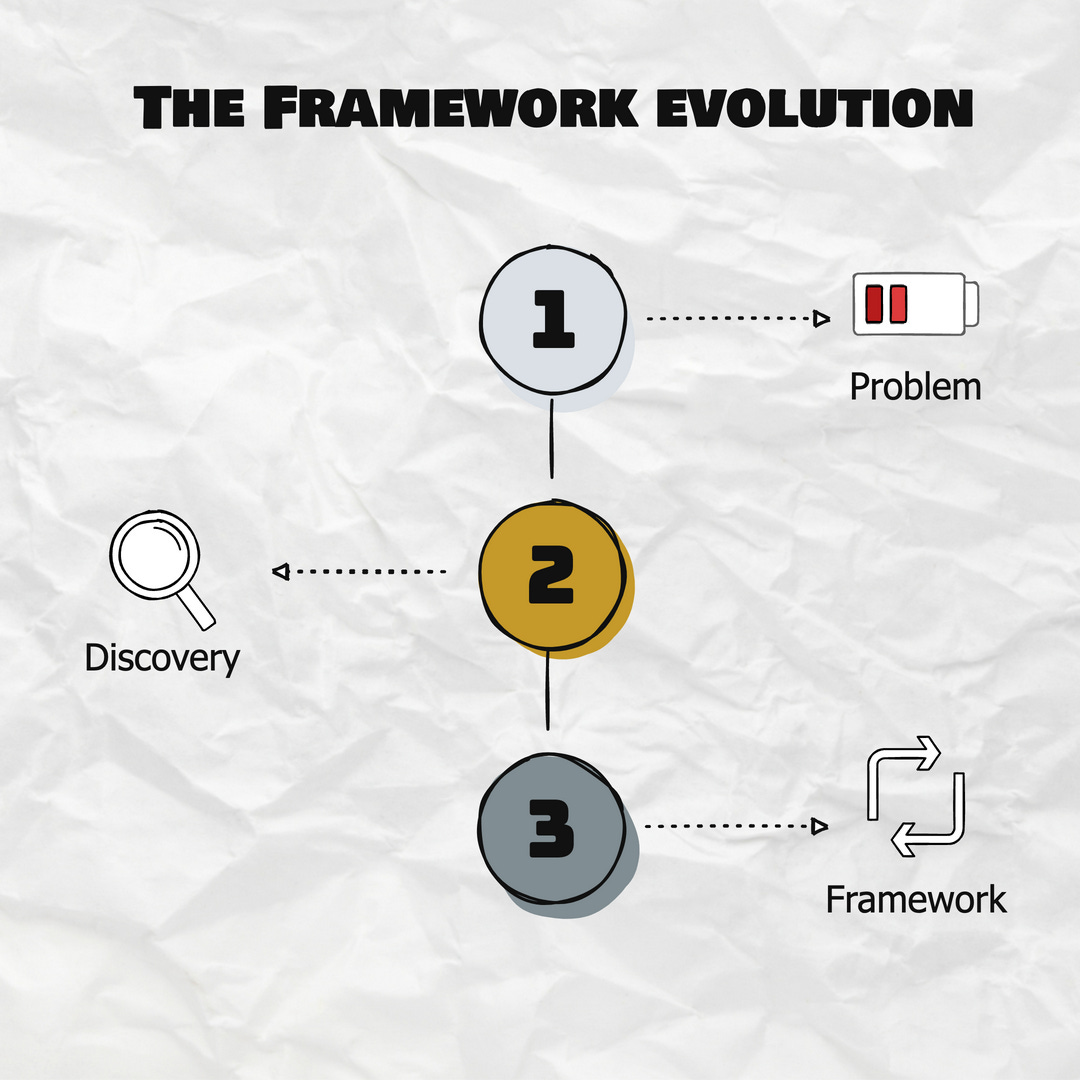
That LinkedIn message changed everything. I stopped focusing only on outcomes and started focusing on insights. My new approach transformed case studies from mere records of past success into building blocks of future expertise. Here’s the difference:
Traditional Case Studies:
Focus on client objectives and desired results.
Detail your solution’s implementation.
Highlight quantifiable outcomes.
Insight-Rich Case Studies:
Uncover recurring patterns that drive transformations.
Highlight pivotal moments that challenge conventional thinking.
Reveal principles tested—and proven—through repetition.
Show emerging systems that grew from unexpected discoveries.
This shift wasn’t just a tweak—it was a transformation. Every case study became an asset, capturing not just what I did but what I learned. Each one helped me build intellectual property that positioned me as an authority in my field.
Building Irreplaceable Expertise
When you approach case studies as opportunities to uncover patterns, principles, and frameworks, you stop simply documenting your work and start building something much more valuable. While others only celebrate past wins, you’re creating systems that influence the future of your industry.
For example:
What assumptions have you challenged in your work?
What patterns have emerged that surprised even you?
What discoveries are unique to your process that competitors can’t replicate?
These insights don’t just set you apart—they compound in value. One great insight can lead to a framework, a signature methodology, or even an entirely new niche.
Transformation in Action
Take the digital marketer who thought she needed another social media case study. As we mapped out her process, one overlooked detail stood out: she wasn’t just tracking engagement rates but noticing patterns in how certain post types drove repeat interactions over time.
This quiet insight became the foundation of a new framework: Engagement Longevity Mapping. By analyzing what kept audiences coming back—not just clicking once—she repositioned herself from a social media manager to a consultant specializing in sustainable audience engagement. One client’s transformation sparked an entirely new business model.
Making Your Expertise Matter More
Here’s the power of shifting from isolated successes to recurring wisdom:
Your case studies become living frameworks that grow in value.
The insights you uncover can fuel signature talks, training programs, or consulting methodologies.
Instead of documenting work others can replicate, you’re building intellectual property that differentiates you in the market.
How to Create Insight-Rich Case Studies
To start building case studies that uncover patterns and frameworks, use this simple 3-step framework:
Problem: What challenge did the client face, and why was it significant?
Discovery: What patterns, principles, or unexpected insights emerged as you worked on it?
Framework: How did these insights evolve into a repeatable system, and how does it create long-term value?
Prompt to Help You Get Started
Here’s a prompt to guide your thinking:
CONTEXT
Your role is to help experts document client work in a way that builds irreplaceable frameworks rather than just testimonials. Focus on extracting patterns, principles, and systems that become more valuable over time.

INPUT REQUIREMENTS
Answer these 3-4 questions:

1. What was the client’s biggest challenge or goal, and why was it important?
2. What did you initially do to solve the problem, and what changed as you worked on it?
3. What patterns or key insights did you notice that shaped the solution?
4. How did the solution evolve into a framework, and what makes it unique?

OUTPUT FORMAT
Client Situation

The client’s challenge or goal and why it mattered.
Key Insights

Patterns or recurring elements that emerged.
The unexpected discoveries that shaped the approach.
Framework Summary

Name and describe the framework that resulted.
Include 2-3 key components or principles.
Results and Applications

The client’s results and the framework’s ongoing value.
Potential ways it could evolve or be applied elsewhere.

QUICK START TEMPLATE
The client, [Client Type], was struggling with [Core Challenge]. To address this, we initially tried [Initial Approach], but [Key Discovery] caused us to adjust. We noticed [Recurring Pattern], which led to the development of [Framework Name]. This framework includes [Key Components] and has resulted in [Results]. It could also be used for [Future Applications].

EXAMPLE
"A SaaS company struggling with a 35% churn rate faced significant revenue risks. We initially introduced onboarding checklists, but feedback revealed clients needed scalable solutions. Recognizing recurring struggles with CRM integrations, we developed the 'Enterprise Onboarding Blueprint,' featuring Orientation, Integration, and Optimization phases. This reduced churn by 25% and is now being scaled for licensing."
Turning Patterns into Possibilities
These case studies are just the beginning. The patterns and insights you uncover can:
Simplify complex processes into repeatable systems.
Create the foundation for scalable training programs or consulting offerings.
Position you as a thought leader by documenting what no one else can.
Every piece of content you publish signals your value to the market. A standard case study places you in the sea of sameness. But insight-rich case studies prove you’re one of a kind. They’re not just about what you’ve done—they’re about what only you can do.
So, what patterns are emerging in your work that could transform how your entire industry approaches its biggest challenges?