

A voice sounds familiar on your next sales call. A testimonial reads perfectly. A case study presents impressive numbers.
But in 2025, nothing feels quite real anymore.
In a near-future world where AI-driven media can forge identities and generate “evidence” in seconds, the very nature of trust is under siege. Deepfakes mimic voices flawlessly, AI conjures "facts" instantly, and even testimonials can be crafted by machines. As these tools advance, trust has become the rarest and most expensive commodity in business.
When everything looks real, but nothing feels true, how do you make someone believe in your work?
The Trust Crisis
The old models of proof are collapsing. Data can be manipulated, testimonials can be generated, and even video evidence can be fabricated. This isn't just frustrating—it's changing how business works.
Consider what we've observed in the market:
A prospect questions a genuine case study because it "sounds too perfect."
A real testimonial gets dismissed as AI-generated due to its polished structure.
Authentic results are met with skepticism because "numbers can be manipulated."
As a result, traditional proof has lost its power, but belief itself hasn't changed. Our brains still want to accept truth—just not in the ways most businesses present it.
The Science of Belief
Your brain doesn't passively absorb information; it constructs reality through neural models shaped by experiences, emotions, and existing beliefs. Before logic even enters the picture, your mind decides if something “feels true.”
This inclination is deeply tied to how we’re wired to process information as narrative. As Will Storr writes in The Science of Storytelling,
“Stories are how we understand ourselves and how we understand others.”
This isn’t just a poetic observation, it’s a reflection of our evolutionary design. We instinctively search for story structure in raw data because it gives us context, meaning, and emotional grounding.
When proof is presented in a way that resonates with these narrative patterns, it feels more natural and convincing.
The Trust Architecture Framework
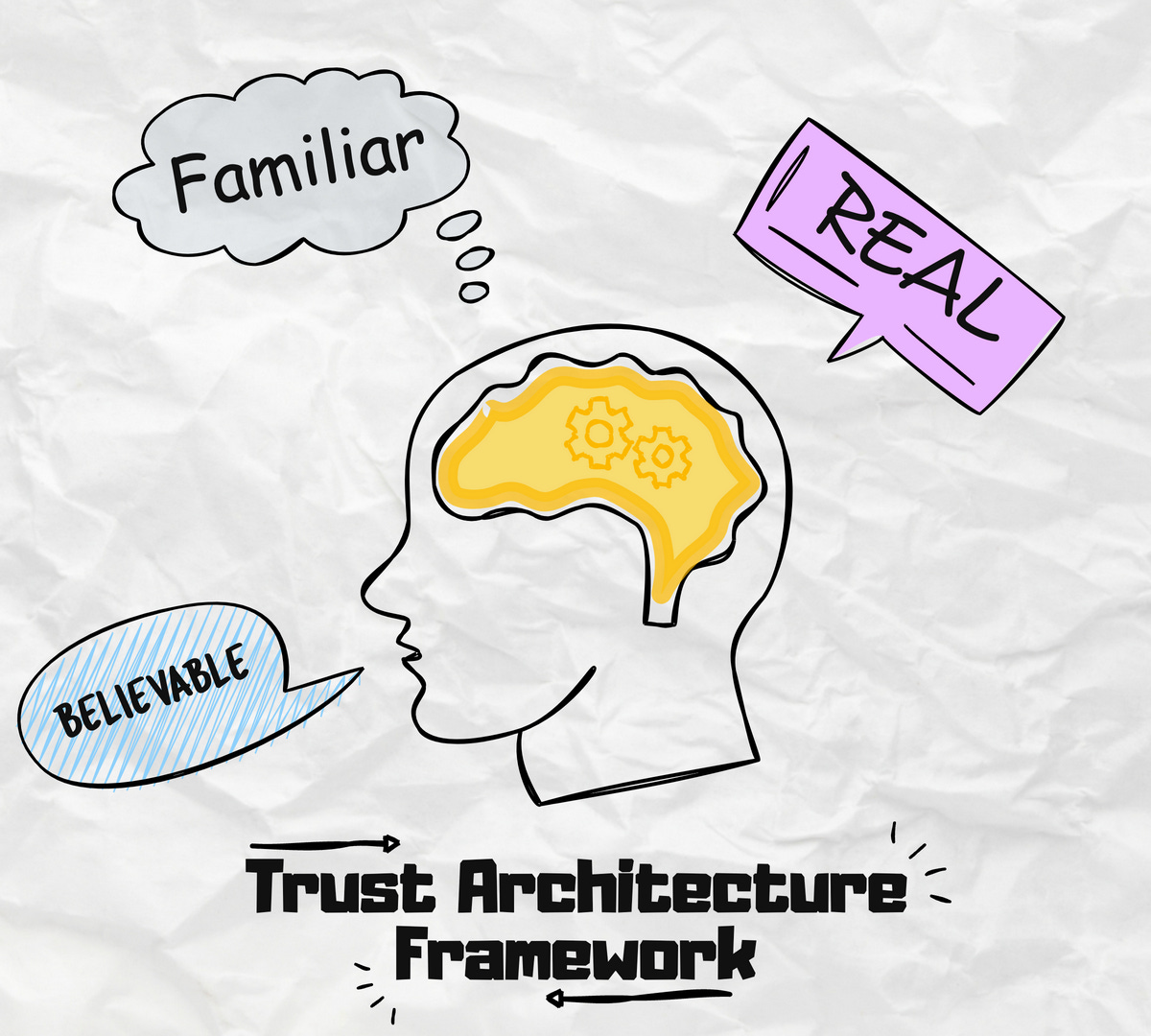
Building belief requires understanding three core principles of how humans accept truth:
1. Neural Resonance: Making Proof Feel Real
Our brains don't trust abstractions. Numbers, percentages, and vague claims float past us like background noise. What we trust are specifics—the vivid details that make something feel undeniably real.
Consider these two ways of describing a business impact:
Version 1:
"Our new system significantly improved team productivity and communication."
Version 2:
"Last Thursday morning, we saw something fascinating. A project that normally required 12 back-and-forth emails was resolved in a single 9-minute conversation. The product manager didn't have to chase approvals. The designer didn't wait hours for feedback. By 10:47 AM, the task was done with everyone actually agreeing on the outcome."
The second version works because it taps into real experiences. You can see the emails disappearing, feel the relief of quick decisions, picture the actual moment of completion. These details trigger what neuroscientists call "neural resonance"—your brain processes them as lived experiences rather than abstract claims.
Key elements that create neural resonance:
Specific times and numbers
Sensory details that create mental images
Unexpected specifics that only come from real experience
Observable moments of change
In other words, tangible detail converts cold data into a scenario your audience can emotionally inhabit.
2. Pattern Recognition: Making Proof Familiar
Humans trust what feels familiar. Our brains are wired to recognize patterns and accept information that follows known structures. Think about compelling movie plots or news stories—they often follow recognizable patterns that make them feel true.
Consider these two ways of sharing a business transformation:
Version 1:
"We helped them improve their sales process and increase revenue."
Version 2:
"Their starting point was clear: sales calls that meandered, proposals that took days to create, and deals that got stuck in endless follow-ups. Then, we identified the three critical gaps in their process. Within 90 days, their sales team had a structured call framework, a proposal template that took 30 minutes to customize, and an automated follow-up sequence. Today, they close deals in half the time."
The second version works better because it follows a pattern our brains instantly recognize:
The painful "before" state
The pivotal moment of change
The transformed "after" state
This three-part structure mirrors how we naturally process stories of change. We've seen this pattern play out in our own lives, making the transformation feel more believable.
Other trusted patterns include:
Problem/Solution/Result
Challenge/Strategy/Outcome
Question/Discovery/Answer
When you present proof using these familiar structures, you tap into your audience's existing mental models of how change happens. Familiar frameworks don’t just simplify your message; they trigger the brain’s expectation for authentic progression.
3. Emotional Coherence: Making Proof Believable
Logic might convince the mind, but emotion persuades the heart. When proof feels emotionally true—when it mirrors genuine human experiences—belief becomes automatic.
Look at these two ways of presenting the same transformation:
Version 1:
"Our workflow system improves team efficiency and reduces stress."
Version 2:
"You know that moment every morning when you stare at your inbox, feeling your chest tighten? When every new message feels like another weight on your shoulders? We watched that feeling transform. Within weeks, teams walked in without dread. They knew exactly what needed attention and what could wait. For the first time in months, they left the office without that nagging sensation of dropping balls or missing deadlines."
The second version works because it connects with lived emotional truth. It doesn't just tell you what changed—it lets you feel the transformation. This emotional coherence makes the proof resonate at a deeper level.
Elements that create emotional coherence:
Recognition of real feelings and struggles
The human side of before and after
Authentic moments of transformation
Relief points that everyone understands
By weaving authentic emotion into your evidence, you ground it in the kind of experience that people trust most—their own.
Implementing the Framework
Here's how to rebuild your proof architecture:
1. Start with Specificity
Document exact times, numbers, and observable changes
Include unexpected details that only come from real experience
Create "proof moments" where people can see the transformation happening
2. Build Familiar Patterns
Structure information in recognizable formats (before/after, problem/solution)
Repeat key proof points in different forms
Use frameworks people already trust
3. Connect Emotionally
Share the feelings behind the transformation
Include setbacks and struggles
Focus on the human impact of the results
When done right, these steps align both the heart and mind, ensuring your proof doesn't just sound plausible—it feels unmistakably genuine.
Transform Your Proof in 10 Minutes
Let's put this framework into immediate action. Choose one piece of proof you currently use in your business—a result, testimonial, or case study. Use these templates to reshape it into something undeniably true:
