



April 13, 1970. Fifty-six hours after launch.
An oxygen tank explodes on Apollo 13. The crew abandons the Command Module and crams into the Lunar Module.
Three men in a tin can designed for two.
The problem hits within hours. The Lunar Module’s carbon dioxide scrubbers are burning out too fast and the Command Module has plenty of spare filters. But those filters are square and the Lunar Module’s filtration system takes round canisters.
Square peg. Round hole. Two hundred thousand miles from Earth…not a Home Depot in sight.
Ed Smylie and his team at Mission Control have twenty-four hours. After that, CO2 levels go toxic and the crew loses consciousness. Then they die.
Here’s the constraint that made it impossible…
They can only use materials already floating around the cabin.
No resupply…no new parts…
Just whatever three astronauts packed for a trip to the moon.
They inventory what’s available.
Plastic bags from the liquid-cooled garments
Cardboard ripped from flight manual covers
Spacesuit hoses
Gray duct tape
A sock
A freakin’ sock.
Three astronauts’ lives hanging on a piece of laundry.
In Houston, Smylie’s team cobbles together a prototype using their MacGyver starter kit. They test it in the simulator. It works. CAPCOM Joseph Kerwin radios the instructions to the crew. Step by step. Over the course of an hour, Jack Swigert and Fred Haise assemble it while Jim Lovell floats behind them, watching.
They call it “the mailbox” and CO2 levels start dropping immediately.
145 Studies Said the Same Thing
In 2019, researchers reviewed 145 studies on constraints and creativity. They expected to find that freedom produces better work.
They found the opposite.
The relationship forms an inverted U. Too few constraints and you get paralysis. Too many and you get nothing useful. The sweet spot is in the middle.
They called it the blank canvas problem.
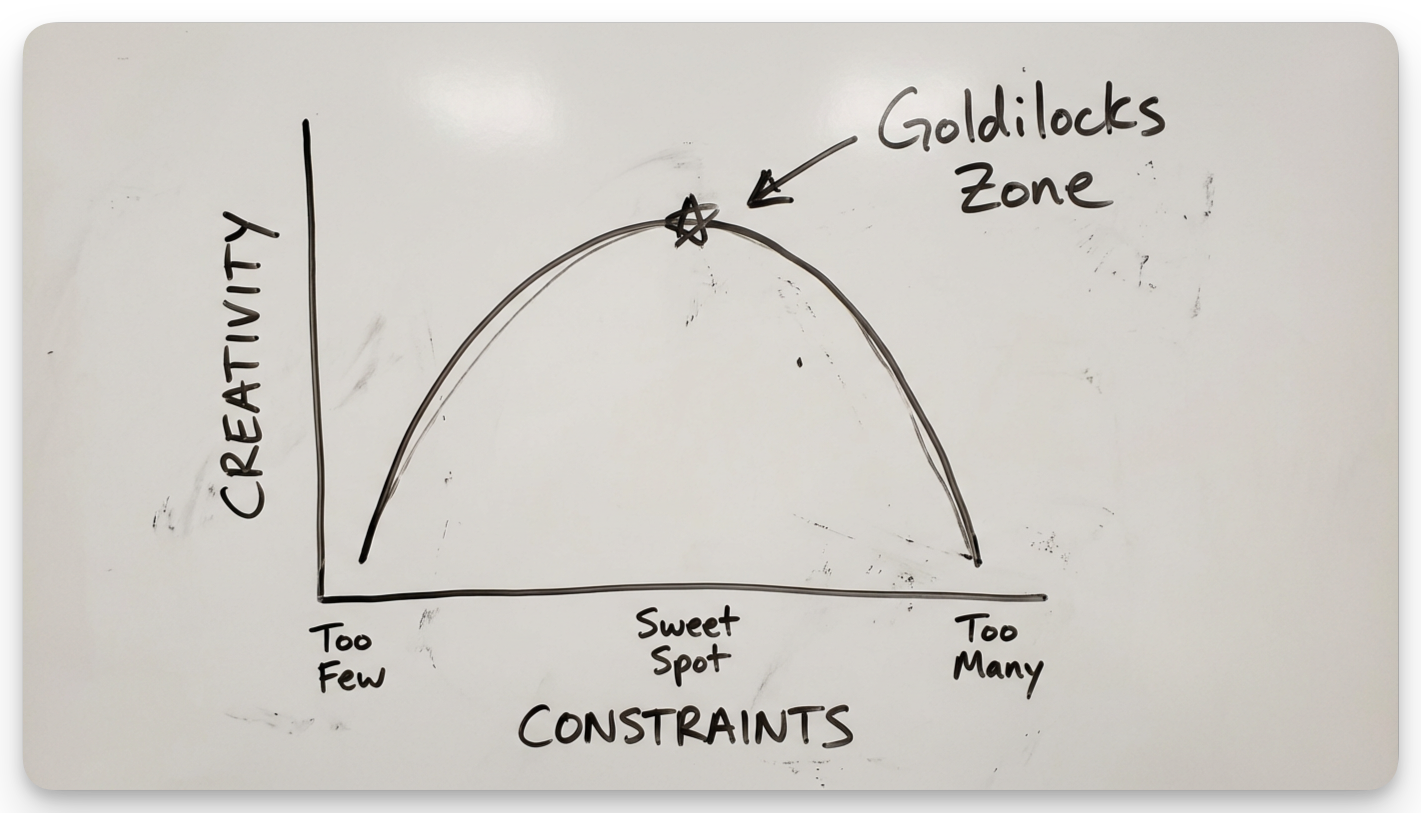
Hand someone a blank canvas and say “paint anything.” They freeze. Hand them three colors and ten minutes. They create.
Constraints aim creativity.
The Apollo 13 engineers didn’t succeed despite the constraints.
They succeeded because of them.
We’re Torching the Script
Zain and I are starting a live show. It’s called The Vault.
The Format:
Working with clients recently, I've discovered I have the most fun and do my best work live. When I am solving real problems in real time for people.
So here's what we are going to do...
You submit a problem. We don’t see it until we turn the camera on.
We pick one and build a solution live using Claude Skills. Thirty minutes. No prep. No safety net.
This sounds reckless…It’s actually strategic.
Most experts spend weeks preparing content designed to look spontaneous. The webinar is scripted. The Q&A is seeded.
The whole production is theater meant to make competence look effortless.
We’re torching the script. The vault opens and we discover what we’re solving at the same moment you do.
This is either going to prove we know what we’re doing or expose that we don’t. Both outcomes are interesting and fun...and to us, that is the point.
Your Constraint
The other constraint is on you.
Before you submit, you run your problem through a 5 Whys Prompt. Three minutes, five questions. You come out the other side knowing what you’re actually trying to solve.
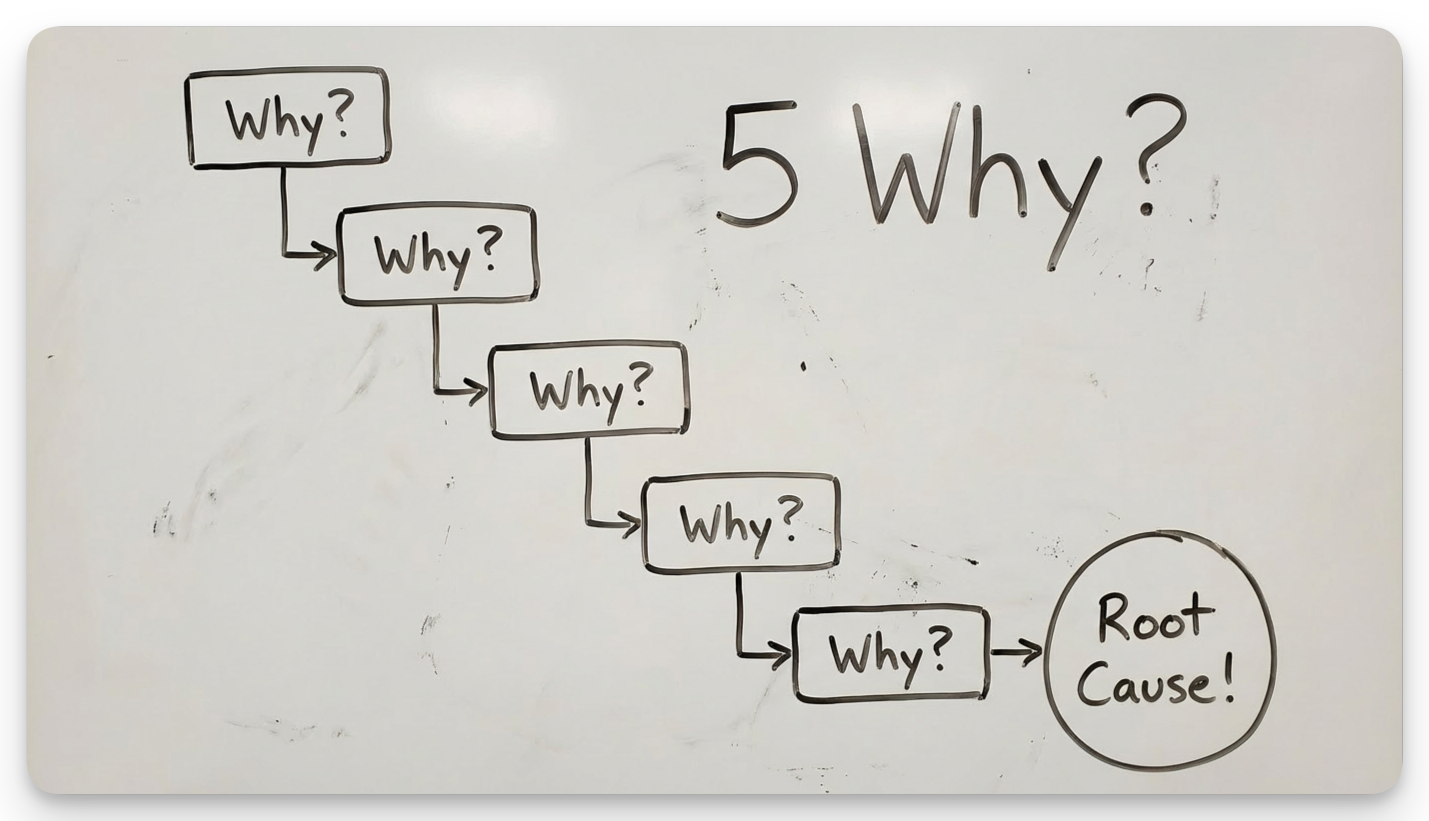
Most people think they know their problem. They don’t. They know the symptom. The real problem is two or three layers down, hiding behind vague language and good intentions.
“I want to be more productive” is a symptom.
“I forget to follow up with leads because I have no system and honestly I’m a little embarrassed about it” is a problem we can solve in thirty minutes.
“The 5 Whys” requirement is a filter.
People who do the work show up differently than people who want to be spoon-fed. We’re building for the former. We started a community called Beware the Defaults.
The default is to skip the prompt and submit something vague. Something safe. Something that sounds good in a LinkedIn post. Don’t do that.
Programmable Expertise
One more constraint: Claude Skills.
Every solution we build has to be a Skill. Not a one-off answer. Not a copy-paste prompt you’ll lose in a folder called “AI Stuff” next to seventeen other things you meant to organize. A reusable system you can run again and again.
Skills are the most underrated feature Anthropic shipped. Lots of people still don’t know they exist. The ones who do treat them like fancy prompts. They’re not. They’re programmable expertise.
We’ve been building these privately for awhile and now we’re building them publicly. For problems we’ve never seen. Under time pressure. On camera. In front of people who will absolutely notice if we choke.
The person(s) whose problem gets picked keeps what we build. So does everyone in the community.
Saw Opportunity
There’s a line from that 2019 research that stuck: “Teams that saw opportunity in constraints benefited creatively from them.”
The key phrase is “saw opportunity.”
Constraints don’t automatically make you more creative. You have to choose to treat them as focusing mechanisms instead of obstacles. The teams that resisted constraints performed worse than teams with no constraints at all.
We’re choosing to see opportunity. In the time limit. In the blind selection. In the public accountability. In the possibility that we might fall flat on our faces while strangers watch.
Sunday at 1pm EST, we open the vault.
We have no idea what’s inside.
That’s the point.
Submit your problem:
The vault locks at 1pm Sunday.
After that, we’re live.
For Paid Subscribers: The Constraint Layer
You’ve probably tried to build an AI workflow before.
You had an idea. “Help me respond to emails faster.” You typed it into Claude or ChatGPT. You got back something that technically answered your question but wasn’t actually useful. So you tried again. Rephrased it. Added more context or tried a different model.
An hour later, you gave up and just wrote the email yourself.
The problem was never the AI. It was the blank canvas.
“Help me with emails” gives the AI nothing to grab onto. No trigger. No constraints. No boundaries. It’s like asking someone to “draw something.” They freeze. Or worse, they draw something mediocre and generic.
What The Constraint Layer does:
It forces you to answer a few questions that turn vague ideas into tight specs. Trigger. Output. Constraints. Context. Ceiling. Audience. Five minutes of thinking that saves hours of frustration.
You come in with “I want to be better at email.” You leave with:
“When I paste a cold inbound email, analyze the sender, check if they match my ICP, draft a reply that books a call if yes, politely declines if no, never use more than three sentences, never use exclamation points, and always end with my Calendly link.”
That’s not a personality setting. That’s a machine.
What’s inside:
The prompt (works in Claude, ChatGPT, Gemini, or any AI tool)
Six constraining questions with examples
Step-by-step instructions for turning your spec into a Claude Skill, ChatGPT Custom Instruction, or saved prompt
A complete example workflow you can pattern-match from
The Constraint Layer is the sock and duct tape. It’s what focuses everything else.
The Key Insight: Skills Can Be Workflows
Most people treat custom instructions like personality settings:
“Be concise”
“Don’t use emojis”
“Sound professional”
That’s fine. But there’s another level.
A skill can be an entire workflow:
Triggered by a specific input
Running a specific sequence of steps
Stringing together Skills
Producing a specific output
Example: “When I paste a meeting transcript, extract action items, identify who owns each one, format as a bulleted list with deadlines, and flag anything without a clear owner.”
