

Quick note before you read this...
If you’re subscribed to Signal > Noise, surprise, it’s about to be called Cognitive Fingerprint™.
Probably not a big surprise and what this should have been from the start. But like everything, it’s part of the evolution.
But here’s a bit more on the “why.”
Every conversation I see right now treats humans like line items to be replaced.
Employees as costs
Headcount as a number to shrink
AI as the lever
I want to spend my time on what makes you, specifically, you.
The invisible patterns that separate your best work from anyone else’s. The stuff that gets ignored the second someone hands you a generic playbook. AI doesn’t replace that. Pointed at the right thing, it amplifies it.
My goal is to show you how to point it and walk you through the people whose patterns got sharper the second AI showed up.
That’s what CF has always actually been. Now the newsletter has the right name.
Expect a lot more from here and other places. My three partners, Zain Merchant, Tam Nguyen, and Zain Haseeb, are going to show up in their own unique ways more often too. They’re a big part of why this is working.
Anyway. Dr. Pepper. Keep reading.
— Max
I was watching baseball this weekend when a commercial came on for Dr Pepper. Instead of getting another snack, I found myself asking Perplexity a question my marketing brain couldn’t get past.
Is Dr Pepper really made with 23 flavors, or is that just a gimmick?
The short answer... yes…but it’s complicated. The formula uses 23 flavor compounds and parent company Keurig Dr Pepper has confirmed it.
But here is where it get’s fun. Nobody outside the company knows what they are.
I’m not talking about the ingredients on the label (carbonated water, corn syrup, caramel color, phosphoric acid, caffeine, sodium benzoate, and a catch-all bucket called “natural and artificial flavors”).
Or any of the viral leaked lists floating around since 2008 with almond and plum and a Bob Hope joke about prune juice (“a drink that moves you!”) That’s all fan fiction. The actual 23 are sealed in a proprietary blend the FDA lets companies hide.
Dr Pepper’s actual recipe is split across two separate Dallas bank vaults. Half in each, like two pieces of a doomsday riddle. 141 years of refusing to show you what’s in the bottle.
And this is where I had to keep digging.
Four brands. Each with a secret vault.
OK, there has to be other companies who have used this trick before, right? Turns out, quite a few:
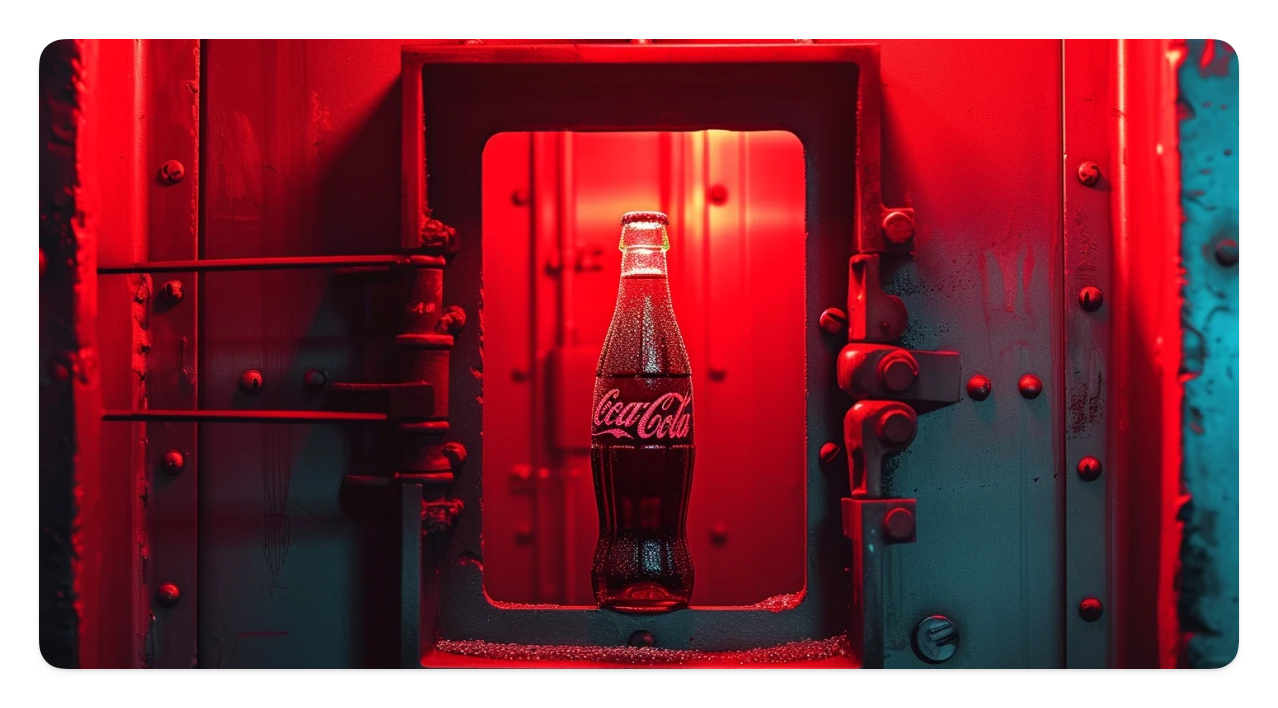
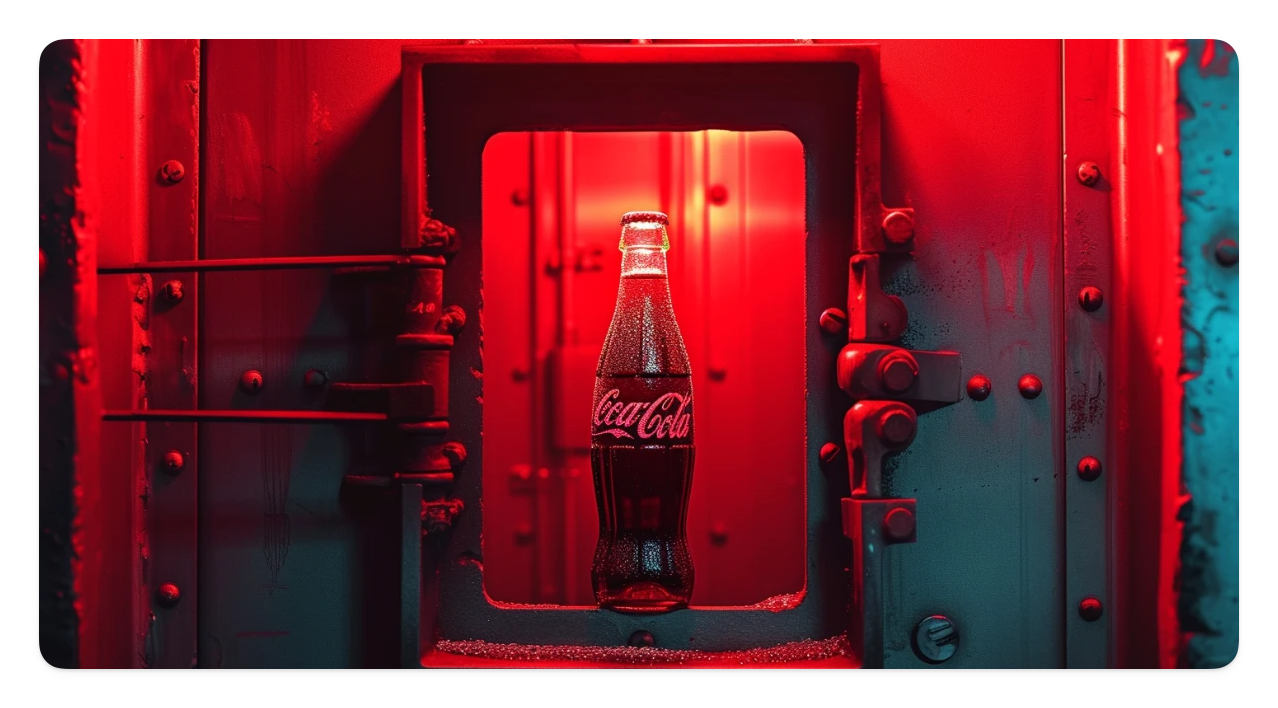
Coca-Cola calls their formula “Merchandise 7X,” and they keep it in a vault at the World of Coca-Cola museum in Atlanta. Only two executives know the recipe, and they’re forbidden from flying on the same plane.
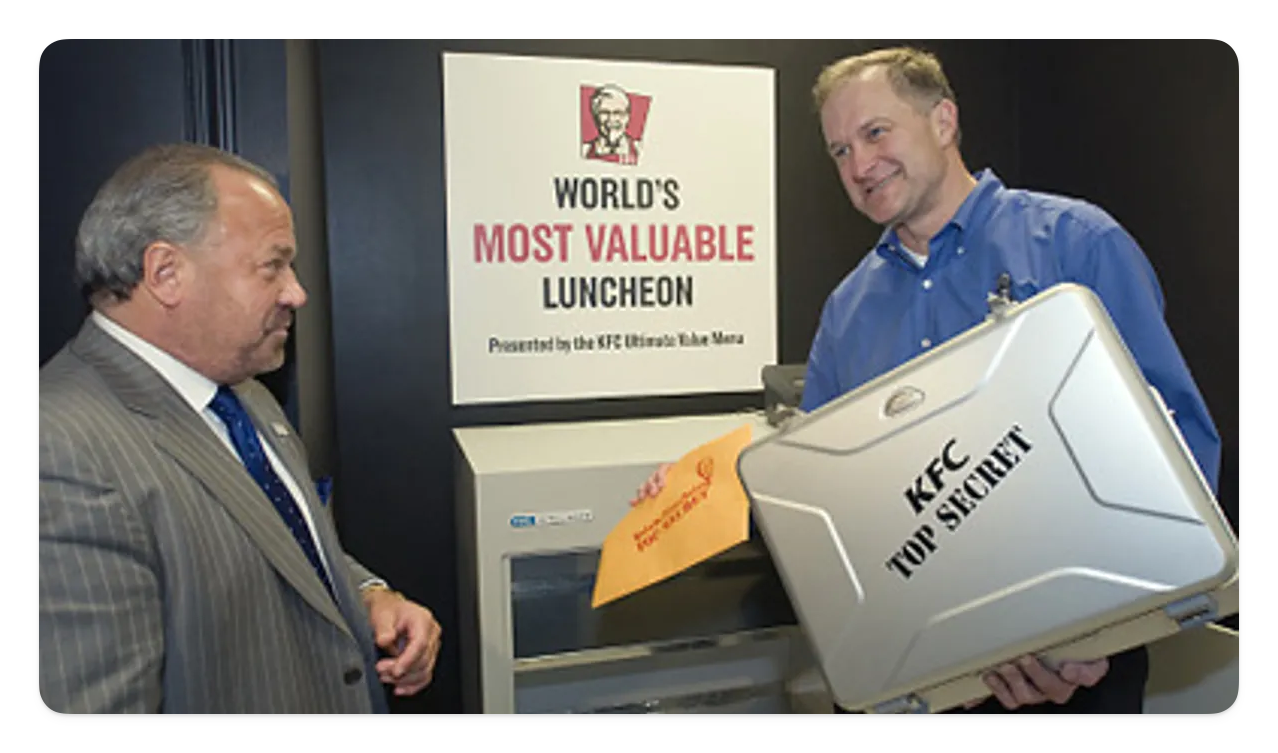
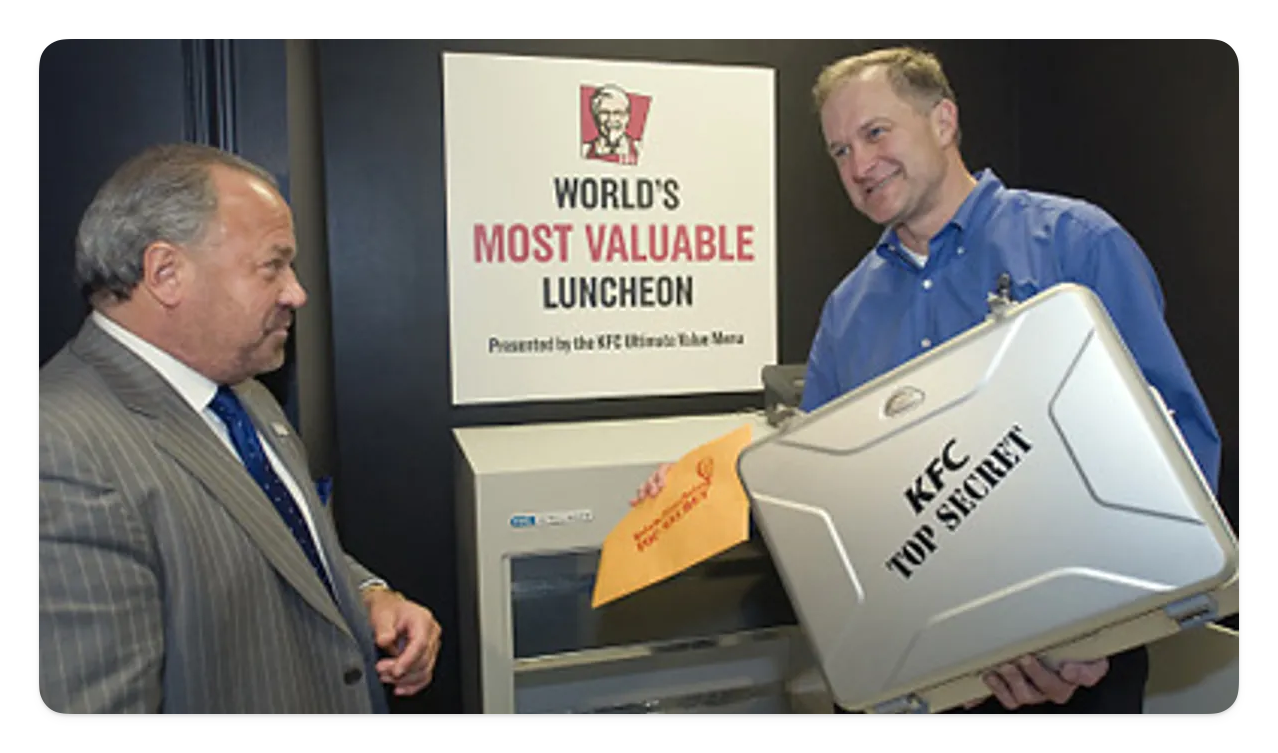
KFC splits the 11 herbs and spices across two separate factories. Neither factory has the complete formula. The final mix happens at a third site with 24-hour surveillance.
Chick-fil-A keeps the original sandwich recipe in a literal safe at their Atlanta headquarters. They won’t tell anyone who holds the combination.
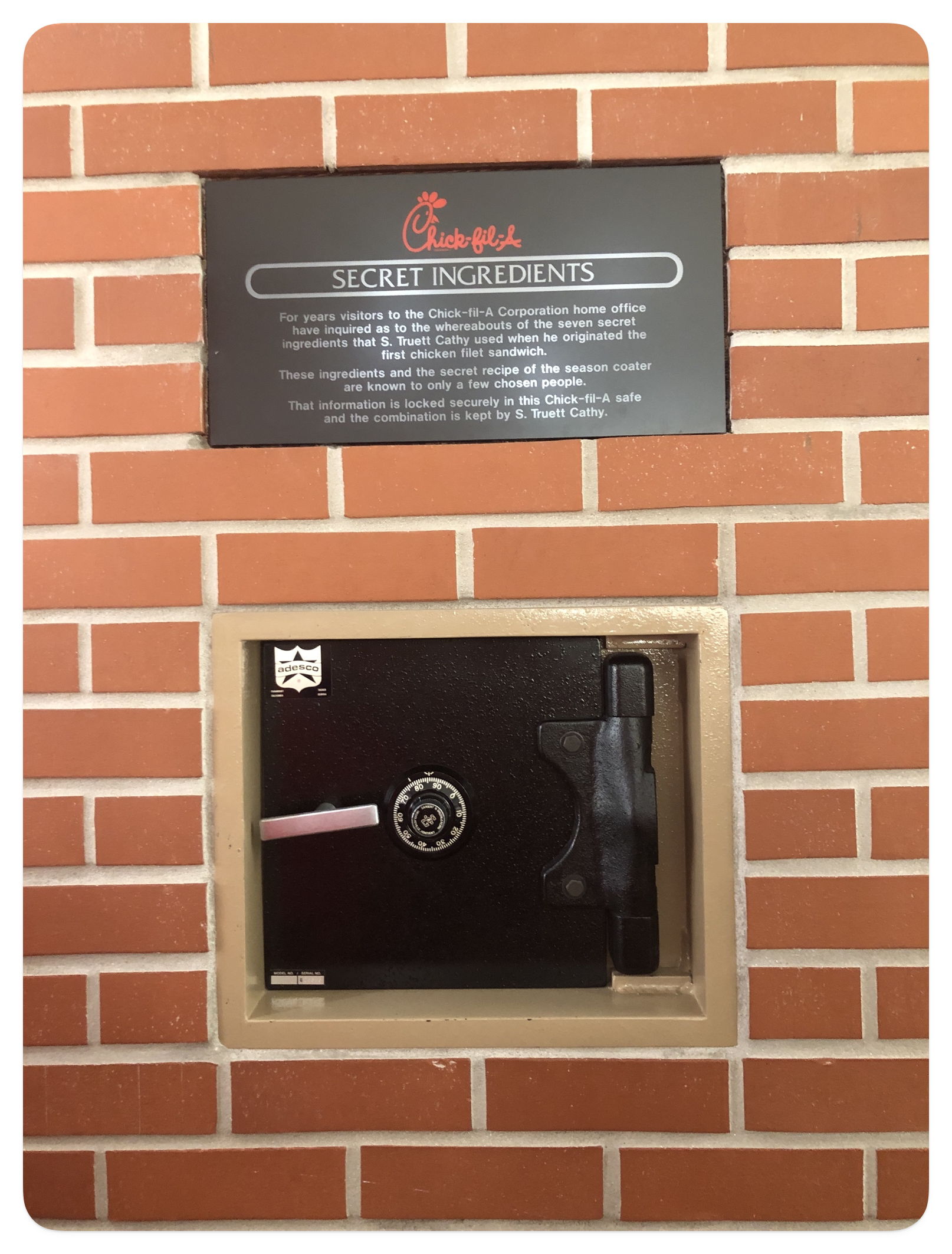
But what’s crazy (or so I thought) is that none of them have patented their secrets. Every instinct says you’d want that protection. Patents are how businesses are supposed to guard their inventions.
I kept clicking because something about it felt backward until I read the fine print.
Patents expire after 20 years and require full public disclosure upfront. You show the world your formula in exchange for 20 years of protection, and after that anyone can copy it. Trade secrets, on the other hand, last forever... as long as you never show anyone what’s in the bottle.
The mystery is the asset. Locking it up is the business model.
It all made sense when I found the 1963 Dr Pepper lawsuit. At the time, a federal anti-monopoly rule required major bottlers to carry non-competitive soft drinks in their facilities. If you were Pepsi, you had to bottle anything that wasn’t a cola. Dr Pepper’s lawyers spotted the gap and sued the federal government for the right to be legally classified as a non-cola. “A pepper type drink,” they argued.
They won and because Pepsi had no competing pepper-type drink, the ruling forced Pepsi’s bottling facilities to distribute Dr Pepper nationwide.
A category of one became a legal category of one, which became a national distribution line.
That’s when it stopped being about soda for me.
I work with consultants, coaches and experts for a living. Their whole business is proprietary thinking they’ve built over years of work. So when I saw a 141-year-old soda company still guarding its formula, I had one question... why don’t the experts I work with have a formula to guard in the first place?
They have the knowledge
They have decades of experience
They have something proprietary buried in there somewhere
They’ve just never named it, shaped it, or locked it up.
The soda companies figured out the move in the 1880s. The experts I work with still call it “how I do things.”
I mean, look how powerful this concept is!
141 years after they locked up the recipe, strangers on YouTube are still making free content trying to guess what’s in it.
The vault does the marketing too.
“Take two parts Coke, one part root beer, drink it and tell me that isn’t Dr. Pepper.”
That video is somebody’s spare-time conspiracy theory. Dr Pepper didn’t pay for it.
In 2009, a Tulsa man named Bill Waters was poking through a Texas Panhandle antique store. Under a wooden medicine crate, for $200, he found a tattered ledger from the original Waco drugstore where Dr Pepper was first served in 1885.
Inside, a handwritten recipe titled “D Peppers Pepsin Bitters.” Heritage Auction Galleries put it up for auction expecting $50,000 to $75,000. The AP ran the story. Dr Pepper’s parent company had to issue a corporate statement saying no, that isn’t the formula. The book didn’t sell. The coverage ran anyway.
The vault just keeps generating it.
Now look at yourself.
You’re not a soda. You’re an expert. You sell thinking.
So if you read that story, nod, close the tab, and go back to writing another LinkedIn post about “the top ten ways to do x,”
That’s the problem I want to talk about.
Every expert I know has a vault.
They just don’t know it’s there.
The Legal Pad Test
Early in his career, marketer Todd Brown sat in a coffee shop across from a prospect. A legal pad on the table. Five columns, one per coach. Four rows of criteria. Price. Credentials. Testimonials. Guarantees. Todd was column three, sandwiched between two coaches with nearly identical resumes.
The prospect looked up and said, “You all seem pretty similar. I guess it just comes down to price and who I like best.”
Todd was being priced like canned corn.
He calls his framework the Unique Mechanism Matrix. It plots two axes, uniqueness and substance, across four quadrants.
Commodity Hell is the default address. Nothing unique, no substance behind the differentiation. Price war territory.
Some climb to Commodity Plus. Good at the work, forgettable. The prospect can’t describe what you do that the next person doesn’t.
A dangerous few land in Faux Mechanism. Named something that sounds proprietary. “The 7-Step Blueprint.” “The Accelerator Method.” Press on it and the substance dissolves.
Few reach Unique Mechanism. Unique AND substantive. Category of one. The prospect stops comparing you cell by cell because there’s nothing to compare you to.
The spreadsheet only works when everyone fits in the same columns.
Three Vaults. Two You Can Open.
When you hear “Dr Pepper has 23 flavors” or “Chick-fil-A has a safe,” you translate it as “I need a patent.” You don’t have one. The whole thing feels out of reach.
Todd’s move is to break the mechanism into three types. One isn’t available to you. The other two are wide open.
Product Mechanism is the what. The ingredient, the formula, the molecule. Dr Pepper’s 23. Coke’s 7X. You can’t have this. Skip it. You’re stealing the move, not the molecule.
Process Mechanism is the how. The sequence, the method, the protocol. KFC splits the blend across three factories so none has the complete recipe. That’s a Process. The specific way you take a client from point A to point B that no one else is doing in that exact order. Available to you.
Philosophical Mechanism is the why you. The contrarian position. The belief others in your industry don’t hold. Chick-fil-A closes on Sundays when every other major chain is open. That’s a Philosophy. The thing you argue at dinner that other people in your field don’t argue. Available to you too.
Every expert has both. Few have named either.
The Paper Tiger Test
Before you name anything, a warning.
Naming is the tip. The mechanism lives underneath.
Todd calls the failure mode the Faux Mechanism. A paper tiger that looks real from the front and tears apart the first time someone presses on it.
The test is one question. “Why does your approach actually work?”
A faux mechanism answers with vibes. “It’s a proprietary system.” “It just works.” “Clients love it.”
A real mechanism answers with specificity. When we do X in step 2, it surfaces Y the client wasn’t conscious of, which means the work in step 4 lands on actual constraints instead of performed ones.
If you can’t answer “why” with reasons, you don’t have a mechanism. You have a slide deck.
A Name That Dies in a Calendar
The second mistake is a name that dies in obscurity.
Great names pass five filters. Brown gives one rule at the core. A mechanism name should sound like a thing in a textbook, not like sales copy. The other four are how I make sure that one actually holds.
It sounds like a thing. Put a ™ after it. Does it look natural, or does it look like you’re dressing up a phrase?
It creates curiosity. The person hearing it asks “what’s that?” instead of “cool, thanks.”
It’s memorable. One to four words. The person can repeat it at dinner after hearing it once.
It signals the mechanism, not the benefit. The name should hint at how it works. The move, the lever, the cause. “Lumbar Reactivation” tells you the muscle group and the action. “Cash Flow Compounding” tells you the engine. “The Back Pain Relief Protocol” tells you the wish, which is product copy. Save the benefit-driven name for the wrapper, not the mechanism inside.
It’s differentiated. Doesn’t sound like the 12 other frameworks in your industry.
The named methods I see fail three out of five. “The Growth Accelerator Blueprint.” Sounds proprietary, carries no information, fails the cocktail party test, blends into every other accelerator blueprint out there.
A mechanism without a name dies in someone’s calendar.
Your Move This Week
Not “find your unique mechanism.” Too abstract. I’ve done it. Forty minutes of staring and getting distracted by YouTube.
Instead, pick one specific thing you do with a client that no one else in your industry is doing. One. Be boring about it. Maybe it’s a question you always ask on call three. Maybe it’s a template you hand them before the kickoff. Maybe it’s a specific sequence you use to run a teardown.
Now name the thing. Four words or less and run it through four checks.
Name. Does it pass the five filters? ™-ready, creates curiosity, 1-4 words, signals the mechanism (not the benefit), different from the 12 other frameworks in your industry.
Type. Is it a process (the how) or a philosophy (the why you)? Be honest. If it’s “kind of both, a little of each,” it’s probably neither yet.
Substance. Can you write one paragraph that answers “why does this actually work?” without using the words “experience,” “proven,” or “proprietary”?
Vault. Can you talk about the concept publicly while keeping the specific sequence private? If the whole thing lives on your sales page, you don’t have a vault. You have a brochure.
If any one of those breaks, you’re not done. Keep working on the thing itself.
If all four hold, you just moved out of column three.
The Gap: The Value Builder
You have the matrix, the three types, the faux tiger test, and the five filters. You have the shape.
Your mechanism is buried in years of client work, call notes, and case studies. The same invisibility that makes it proprietary makes it hard to see alone. The chef can’t taste their own kitchen.
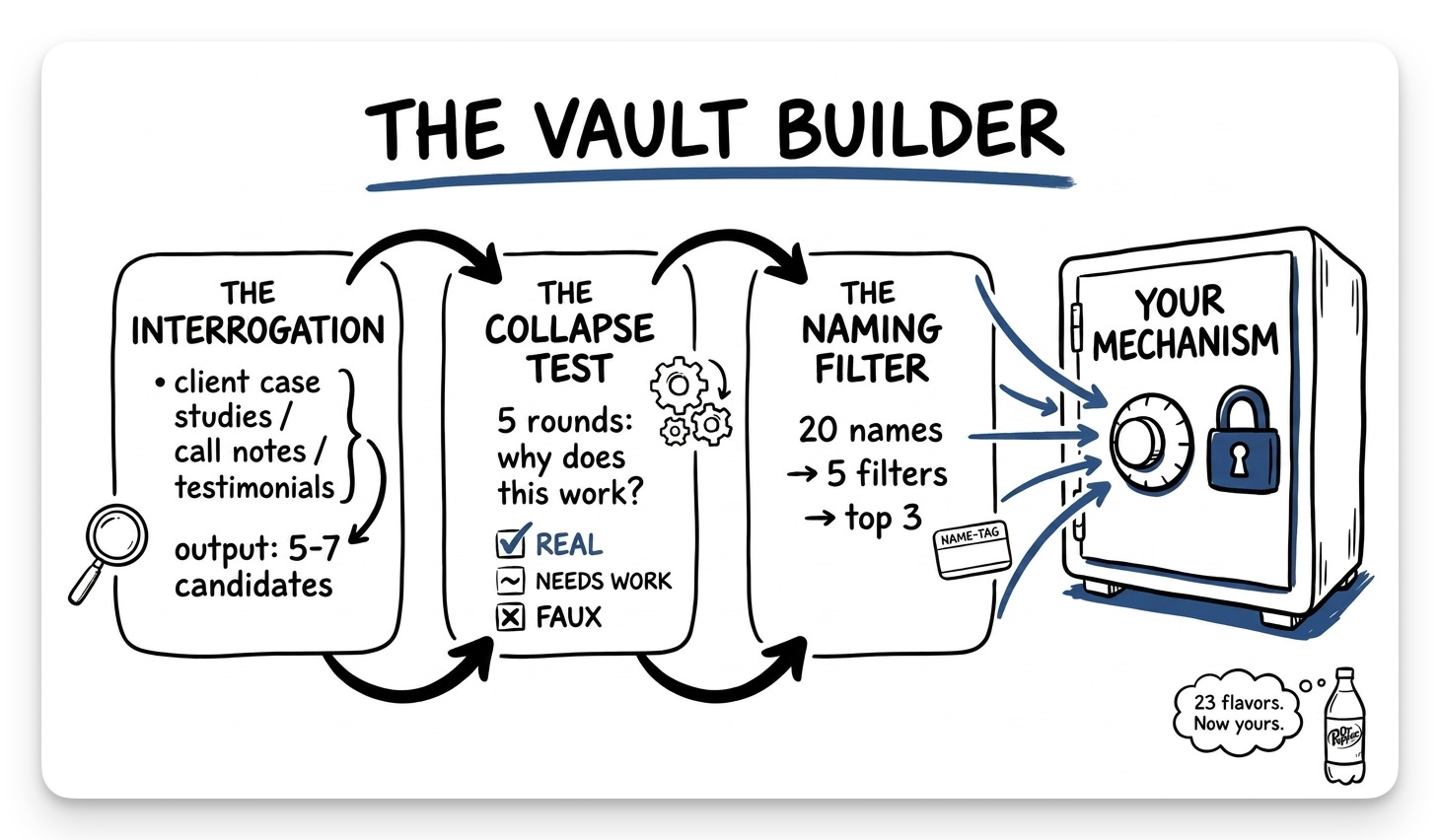
The Vault Builder is three prompts that run this framework on your own material. Feed it your case studies and call transcripts.
Prompt 1 surfaces 5-7 candidate mechanisms you actually practice (not the ones you claim on your website).
Prompt 2 runs each candidate through a five-round collapse test so you know which ones hold up under pressure.
Prompt 3 generates 20 name candidates scored against Todd’s five filters and recommends the top three.
Two formats ship together. Copy-paste prompts you can run in any Claude chat. Or a downloadable Claude skill (vault-builder.skill) hosted at cognitivefingerprint.ai/prompts. Installs once. Runs the whole protocol with a single command. Use whichever fits your setup.
What took me months of Cognitive Fingerprint development, compressed into an afternoon with material you already have.
🔒 The Vault Builder
For paid subscribers. Three prompts. One protocol. Run them in order.
How to use The Vault Builder
Gather material. 3-5 client case studies, call transcripts, or testimonials. More is better. Raw is better than polished.
Run Prompt 1. Pick the 1-2 most interesting candidates — the ones that made you go “huh, I hadn’t thought of it that way.”
Run Prompt 2 on each finalist. Kill the ones that don’t survive. Do not negotiate with a faux mechanism.
Run Prompt 3 on the survivor. Pick a name from the top 3.
Write a 30-second explanation of why your mechanism works, without using “experience,” “proven,” or “proprietary.” If you can write that paragraph cleanly, you just built your vault.
That’s the whole kit. Run it once for your primary offer. Run it again in six months when the work has evolved. The mechanism isn’t static. The protocol is.
Or run it as a skill
Prefer Claude Code or Claude Desktop over copy-paste? The Vault Builder is packaged as a downloadable Claude skill at cognitivefingerprint.ai/prompts. Scroll to Subscriber Skills, unlock with your community password, download vault-builder.skill, drop it into Claude’s capabilities, and run the whole protocol with one command.
Same three prompts, same collapse test, same naming filter. One keystroke instead of three copy-pastes.
Prompt 1 — The Interrogation
Surfaces candidate mechanisms from your existing material. Feed it 3-5 client case studies, call notes, or testimonials.
You are helping me find my unique mechanism — the specific thing I do
with clients that almost no one else in my industry does in the same way.

Below is a collection of my client material (case studies, call notes,
testimonials, process documentation). Your job is to read it looking
for a specific type of pattern.

IGNORE: things I SAY I do. Things I CLAIM to do. Anything from a
sales page or LinkedIn bio tone.

LOOK FOR: things I ACTUALLY do, in order, that show up repeatedly
across multiple clients — especially moves the client didn't expect
and later references as the turning point.

Surface 5-7 candidate mechanisms. For each, give me:

1. THE MOVE — what I actually do, described concretely. Not "I help
   clients see X" but "I ask these three questions in this order,
   then I do Y with the answers."

2. EVIDENCE — which specific moments in the material show this move
   happening. Quote directly.

3. WHY IT MIGHT BE UNIQUE — what most people in my industry seem to
   do instead, based on how my clients describe competitors or prior
   providers in the material.

4. WHAT IT PRODUCES — the specific outcome, realization, or shift
   this move creates for the client.

Be boring. Don't package. Don't invent mechanisms I don't actually
practice. If you can only find 3 real ones, give me 3.

My material is below:

[PASTE YOUR MATERIAL HERE]
Prompt 2 — The Collapse Test
Takes one candidate from Prompt 1 and stress-tests it. Real mechanism or paper tiger?
I'm going to give you a candidate mechanism and my one-paragraph
answer to "why does this actually work?"

Your job is to pressure-test that single answer from five angles.
Don't ask me follow-up questions. Don't invent what I would say
next. Analyze the specific words I gave you and tell me where
they hold and where they collapse.

A real mechanism survives the pressure test with specific, causal,
physical reasons in the answer itself. A faux mechanism dissolves
into vibes the moment you press on it.

Apply all five angles to my answer below:

ANGLE 1 — Vibe detection
Flag every use of "experience," "proven," "proprietary," or any
hand-waving language. Quote them directly. Those aren't reasons,
they're filler.

ANGLE 2 — Causal depth
Take the most load-bearing claim in my answer and ask "why does
THAT work?" one level deeper. If my answer already addresses that
deeper layer, say so. If it doesn't, write the exact question I
haven't answered.

ANGLE 3 — The inversion
Based on what I wrote, what would the OPPOSITE approach look like?
Does my answer explain why the specific approach matters versus
the opposite? Or is it generic enough that the inverse approach
could also claim the same justification?

ANGLE 4 — Defensibility
Could a smart competitor read my answer and copy this in 30 days?
If the mechanism lives in the explanation, it's exposed. If it
lives in the practice that the explanation only describes, it's
protected. Which is it?

ANGLE 5 — Hostile peer
If a skeptical peer in my field read my answer, where would they
poke holes? Name the specific sentences or claims a hostile peer
would target.

After the five angles, give me one of three verdicts:

✅ REAL MECHANISM — survived all five. Tell me what specifically
   makes it survive and how to talk about it.

⚠️ NEEDS WORK — survived 3 or 4. Tell me which angles it failed
   on and what's missing to make it real.

❌ FAUX MECHANISM — failed 2 or more. Tell me what's actually
   missing and whether this is salvageable or needs replacing.

ESCAPE HATCH: If my answer is too short or too vague to analyze
(fewer than 3 sentences, or all abstract language with no specifics),
don't force a verdict. Tell me exactly what I need to add before
you can pressure-test it.

Don't be diplomatic. I'd rather find out from you than from a
prospect.

My candidate mechanism (from Prompt 1):

[PASTE THE CANDIDATE HERE]

My answer to "why does this work?":

[ONE PARAGRAPH — at least 3 sentences, specific and causal, no hedging]
Prompt 3 — The Naming Filter
Takes a verified mechanism and generates 20 name candidates, scored against Todd Brown’s five filters.
I have a unique mechanism that just survived the collapse test. I
need a name for it — one that sounds like a thing, creates curiosity,
is memorable, signals the mechanism (not the benefit), and doesn't
sound like the 12 other frameworks in my industry.

STEP 1 — Generate 20 candidate names. Mix these patterns:

- Action + Object (e.g., "Stack the Deck," "Anchor the Frame")
- Adjective + Noun (e.g., "Contextual Reinforcement," "Lumbar Reactivation")
- Number + Element (e.g., "The 5-Part Formula")
- Compound invented term (e.g., "Cognitive Fingerprint")
- Metaphor-based (e.g., "Cash Flow Compounding," "Soil Regeneration")

STEP 2 — Score each candidate on the five filters (1-5
each, total out of 25):

Filter 1: SOUNDS LIKE A THING — Does it feel natural with a ™? Could
  it go on a book cover, in a college textbook, or in a TED talk
  without looking forced?

Filter 2: CREATES CURIOSITY — Does the listener ask "what's that?"
  Or does the name explain too much and close the loop?

Filter 3: MEMORABLE — Can it be repeated after one hearing?
  (1-4 words. Rhythm matters.)

Filter 4: SIGNALS THE MECHANISM — Does the name hint at HOW it
  works (the move, the lever, the cause)? Names that signal the
  buyer's BENEFIT belong on products, not mechanisms. ("Lumbar
  Reactivation" passes; "Back Pain Relief Protocol" is product copy.)

Filter 5: DIFFERENTIATED — Does it sound different from the other
  frameworks I'm likely competing against?

STEP 3 — Recommend the top 3 by total score. For each, tell me:

- Why it scored highest
- What it evokes (the associations it carries)
- One risk (what it might accidentally imply or trigger)

Context:

MECHANISM DESCRIPTION: [DESCRIBE THE VERIFIED MECHANISM]
INDUSTRY: [YOUR INDUSTRY]
COMPETITORS' FRAMEWORK NAMES TO AVOID SOUNDING LIKE:
  [LIST 3-5 EXISTING FRAMEWORK NAMES]
THE OUTCOME IT PRODUCES: [ONE-SENTENCE CLIENT RESULT]
TONE PREFERENCE: [playful / authoritative / technical / contrarian]
The mystery is the asset. The vault is a choice. Your 23 flavors are already in the work. You’ve just never locked them up.
Stay Curious,
-Max
Max, I actually remember the Dr. Pepper commercials from the 1970's. You are an incredible storyteller! Thank you very much for giving this training to us. I always look forward to and consume your content as soon as it arrives.
Thank you,
Steven Cox