

In June 1942, a Japanese “Zero” fighter jet, flipped into a bog on Akutan Island, Alaska, and the pilot never got out.
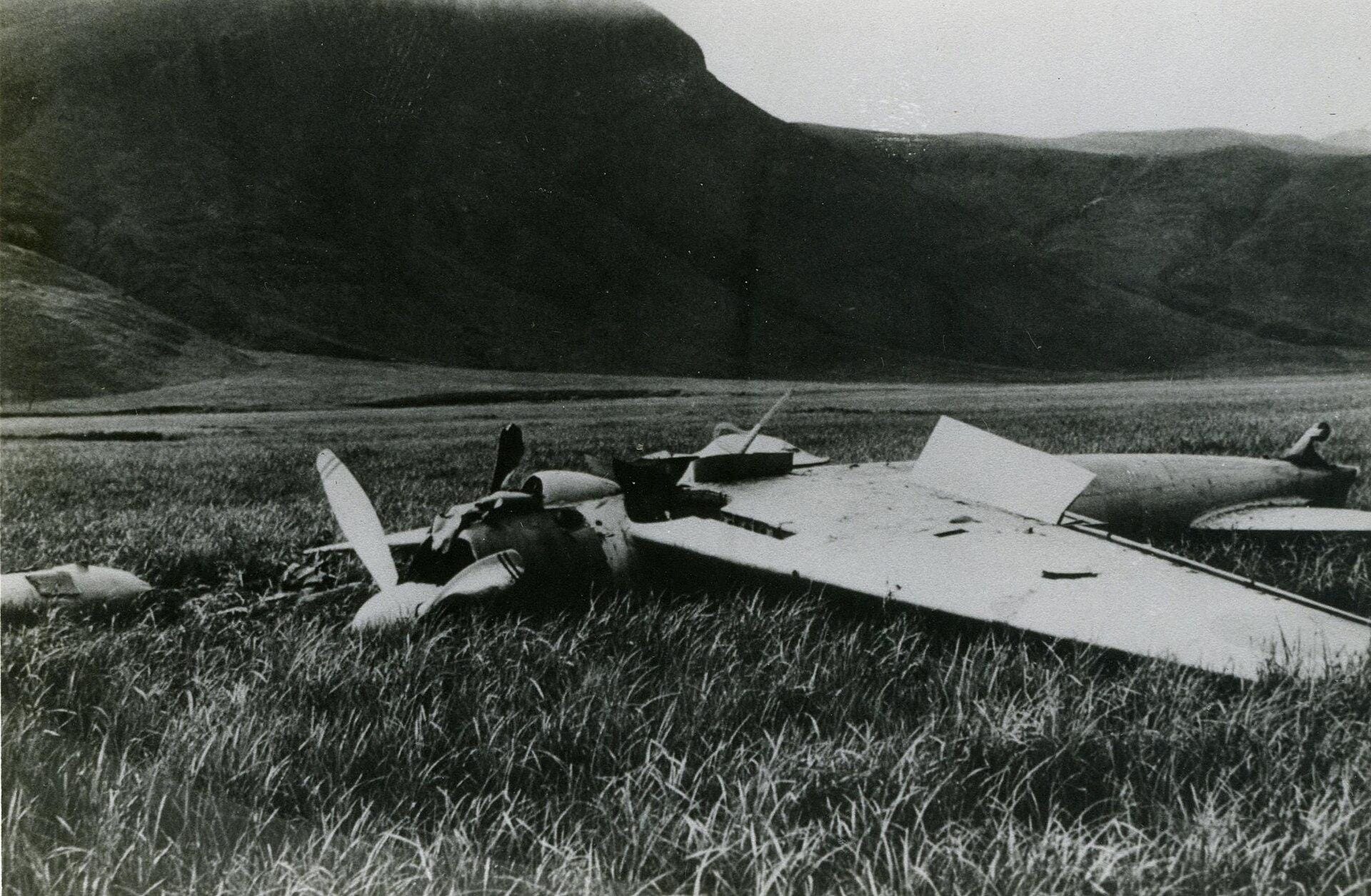
Zero crashed in the Akutan bog. US Navy / NARA.
The island sits in the Aleutians, a chain that looks, on a map, like someone spilled gravel between Russia and Alaska. Fog sits on the water for days. The ground that pretends to be a landing strip is often marsh.
Petty Officer Tadayoshi Koga, flying off the carrier Ryūjō during the raid on Dutch Harbor, put his Mitsubishi A6M down on what he thought was flat ground. The plane somersaulted and Koga died still belted in, hanging inverted in the wreck.
His wingmen circled and the standing order said to destroy a downed Zero so the enemy couldn’t study it. They didn’t fire because they hoped he might still be alive.
He wasn’t, but the plane mostly was.
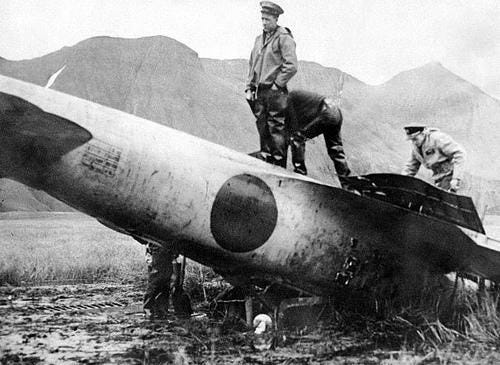
US crew inspects the recovered airframe on Akutan Island. US Navy.
That single intact airframe, later recovered by the U.S. Navy, shipped south, rebuilt, and flight-tested in San Diego, taught American pilots more about beating the Zero than months of briefings that described the same fighter from a distance.
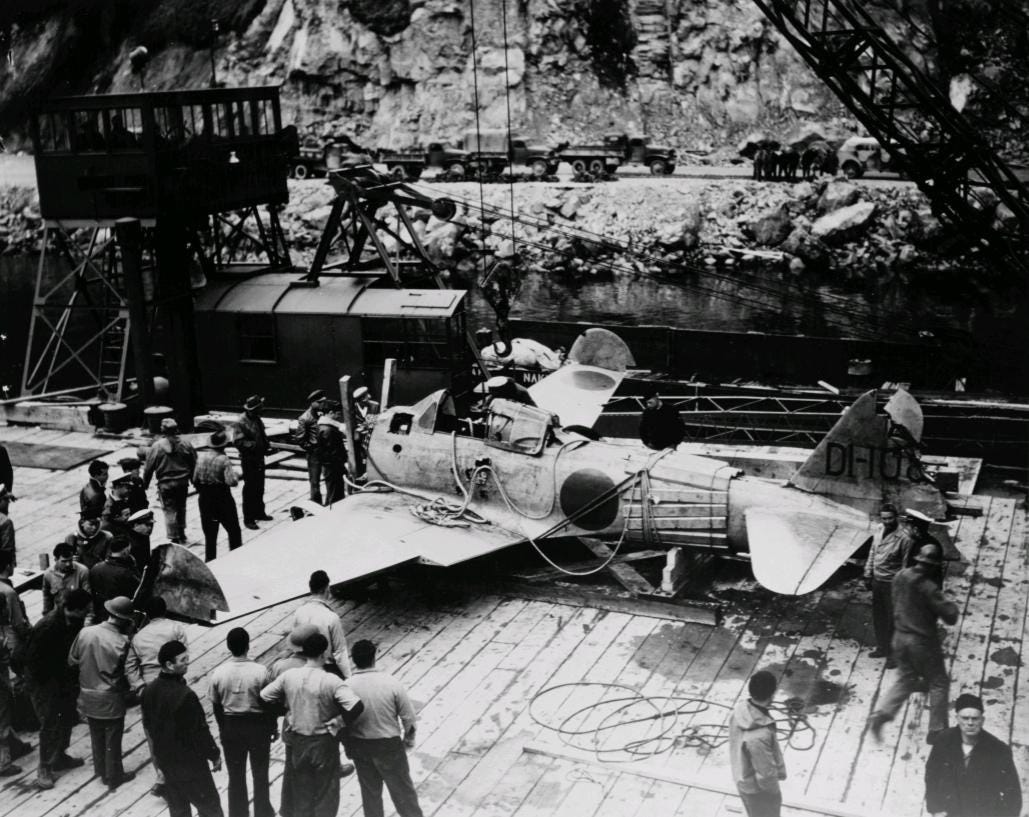
The Zero loaded onto a ship for transport south. US Navy.
I keep thinking about that Zero when I sit with founders who already “know” what their employees are dealing with.
They have the reports. They don’t have the Zero.
What the briefings already said
By mid-1942, American pilots had met the Zero in the air and hated the experience.
It climbed past them
It turned in between them
In a climb-and-turn fight, they kept losing
Intelligence even had a detailed file which reported light construction, exceptional low-speed agility, thin armor, no self-sealing tanks.
But here was the problem…
A briefing can tell you a plane is light. It cannot tell you what the stick feels like when you push past 200 knots.
In September 1942, Navy test pilot Eddie Sanders took the repaired Akutan Zero up for its first flight at Naval Air Station San Diego. He flew about two dozen tests scenarios over the next few weeks.
On the very first flight, American pilots saw and experienced, exposed weaknesses they could immediately use.
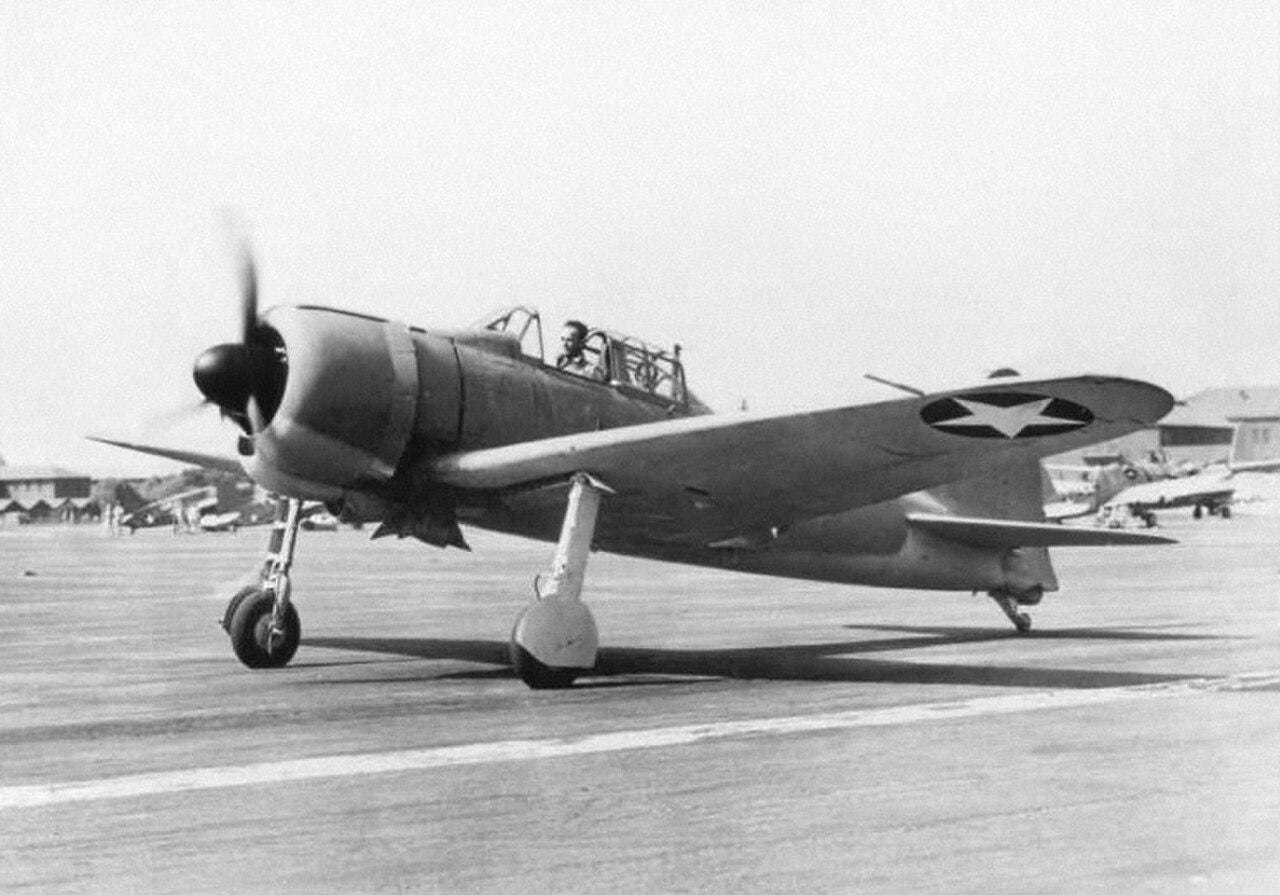
Eddie Sanders taxis the captured Zero at NAS San Diego. US Navy.
The stick stiffened hard at high speed
Rolling at that velocity was slow and created heavy force on the stick.
The plane rolled left more easily than right
Under negative G, the engine cut out because of the float-type carburetor
None of that transferred in the briefing like it did up in the air.
It’s stick feel. Asymmetry. An engine that quit when you asked for a specific kind of acceleration.
In mid-fight, pilots don’t get time to think about facts.
They have fractions of a second to react. A briefing in a folder doesn’t help when another plane is already on you. What helps is body knowledge you can fire without a meeting.
During The dive, open range while the Zero’s engine is coughing, and at about 200 knots roll hard right before he can settle his sights, because his high-speed roll is a slow brick and yours isn’t.
That’s what the intact plane bought.
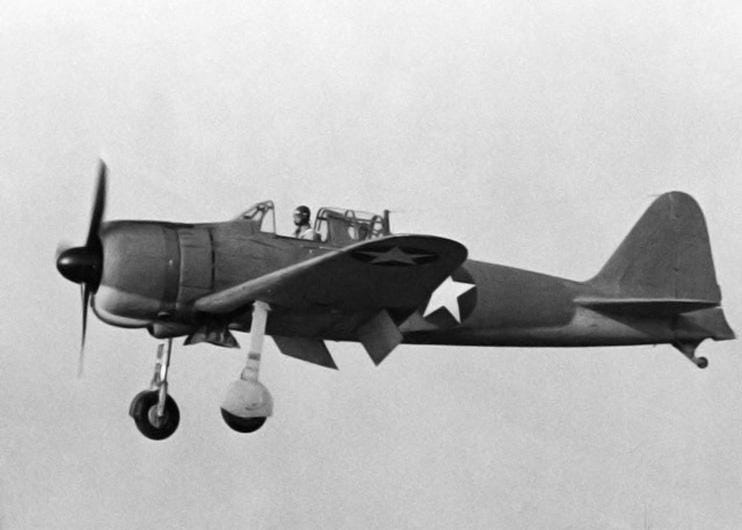
The Zero in U.S. markings on a test hop over San Diego. US Navy.
The war already had piles of intel. It needed one plane you could put a test pilot in.
Your company already has Zeros
If you run a team that sells, coaches, installs, supports, or closes anything complex, you live on a version of this problem every week.
Buried in your processes is your Zero.
These are the moments hidden in plain sight. They live in coaching calls, brainstorms, sales calls…anywhere that a person is problem-solving and tapping into their expertise…their unconscious competence. Many times, we feel them when things don’t go according to plan but we keep the conversation going anyways.
And the craziest part, it often happens without knowing why…we “just knew”.
When we try to investigate we will review our slides. Webinar decks. Meeting agendas. CRM stages. But those are all briefing material.
What you almost never think to look at is the intact plane.
One moment preserved with enough detail that you can spot the seemingly invisible.
My favorite place to go hunting is the call logs. A transcript gives you more than a label.
The sentence where the prospect’s energy dropped.
The ten-second pause your best rep stayed quiet…and then the prospect answered their own objection.
The implicit expectations that when you deliver on, makes you look like a mind-reader.
I work with businesses who are drowning in this frontline intelligence and still lose the same fight on a loop.
The knowledge exists. It lives in our har drives and in the cloud. They are full of “you had to be there” stories that stay hidden or forgotten unless you go in an extract them.
It’s time to find your Zero
You now know why America needed the Akutan Zero more than another folder of Zero reports. Field knowledge beats distant description when you can re-fly the machine. Your company is full of these moments that die in Slack threads and pipeline adjectives. One intact story, captured with handling detail, can teach more than a quarter of debriefs.
The Intact Capture is the prompt that turns one story (a sales call, a coaching session, a site visit, a support recovery, an ops near-miss) into a reusable knowledge object. It forces the scene, the handling secrets, the asymmetries, and the exact moment the engine cut. It writes a green-lie check (what your CRM or checklist will still mark as fine), a stop rule, and a “Do this tonight” block so the knowledge leaves the call and enters the team the same day.
Below the paywall is the full machine. Path A if you can interview the person who lived it. Path B if you only have a recording, transcript, or messy notes. Run it once this week on a real fight you’re still losing. Get the plane on the ground. Then let someone else fly the test.
How to run it
Pick one live fight… a deal, install, escalation, or renewal where your average process keeps losing.
Choose Path A (15-minute interview with the person who was there) or Path B (recording, transcript, or notes).
Paste the prompt. Fill the capture target fields with ugly honest detail. Run it.
Do the “Do this tonight” block the same day. Send the message. File the knowledge object. Try the one behavior on the next similar call.
After one real re-flight, answer the recovery questions and run the prompt once more. Keep the second version.
